Our kitchens carried the revolution
18. March 2026
For years, Syrian women left their kitchens to search prisons and demand answers about their missing loved ones. Now that the regime has fallen, many are being asked to return to the kitchen. Why?
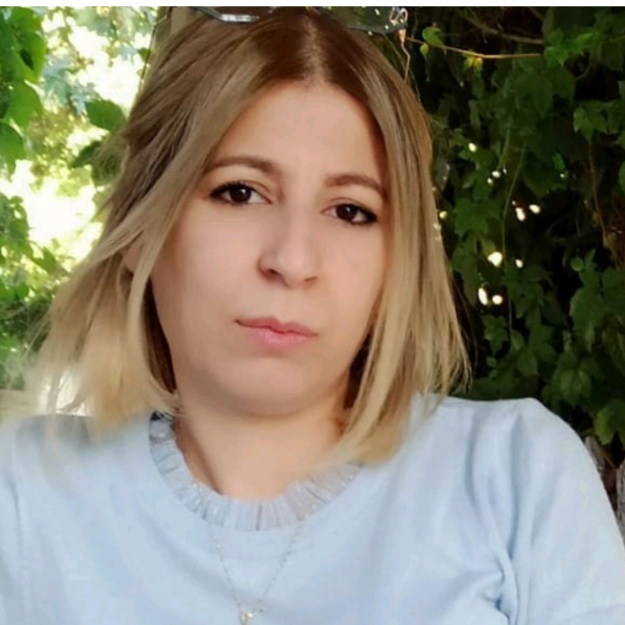
During a conversation about the foods prepared during Ramadan, one woman joked to me: “since you are a chef, you are better off cooking than talking about politics.” It was a joke - but not entirely. I knew her from many political discussions we had both attended, yet in her eyes, today I am better placed in the kitchen than in criticising the current authorities or speaking about Syrian public affairs.
She was not the only one trying to send me back to the kitchen. A friend once debated with me at length in the comments under one of my Facebook posts, only to arrive at a curious conclusion: that as a woman I had somehow lost my femininity because I had involved myself in politics and public life.
For people like them, a woman’s place is clear: the kitchen, the dishes, recipes and desserts. If a woman chooses to speak about politics, criticise authority or discuss the future of her country, she risks — in their eyes — losing her femininity, perhaps even the very reason for her existence.
So, on the occasion of International Women’s Day — and Syrian Mother’s Day — I am writing this article from my kitchen, at the table that has witnessed many political and social discussions.
One of those women
My mother was a simple and ordinary woman. She married young despite her love of learning. My father promised that she would complete her secondary education and then go on to university. But those promises ended, as happens to many women, with her becoming the mother of nine children. She became a housewife whose life was filled with raising her children, cooking and the endless household chores.
My mother never had the luxury of sitting in front of the television to follow the news. Yet this did not prevent her from understanding what was happening around her. She discussed events with neighbours and explained what was unfolding in Egypt and Tunisia when the Arab Spring swept those countries. She liked to listen to the radio while cooking, or to place her phone in the kitchen so she could follow developments and recount them to the women next door.
My mother — who barely knew the streets except on holidays — never imagined she would one day travel alone across Syrian provinces to visit her imprisoned children. Nor did she wish to know the names of Syria’s security branches or the map of prisons scattered across its land.
Yet, like many Syrian mothers and women, she was forced to learn all of it.
She became familiar with Balouna prison in Homs, Sednaya military prison, the State Security branch, Military Intelligence and Adra women’s prison. She memorised the names of checkpoints, learned what it meant when an identity card was “checked”, and stood in long lines outside the courts to attend the trial of her daughter.
My mother never truly left her kitchen. She cooked for her children outside prison — and for us daughters inside it.
The kitchen became part of the struggle for endurance. My mother documented the stories of female detainees and helped secure their needs inside prison. She opened her home to women released from detention, even though many people feared approaching them, suspecting they might still be under surveillance by the security services.
At one point during the revolution, four of her children were in prison while a fifth was in Deir Ezzor, where battles raged and aircraft bombed. My mother remained alone to face the world.
Yet my mother was not exceptional.
She was not the only woman who left her kitchen to search the streets for imprisoned children. Nor was she alone in standing in queues for bread, gas and onions during the years of the former regime — just as many Syrians still do during the crises the country continues to face.
There were thousands of women left alone in a country that devoured its own children like a beast.
In those days, no one would have dared send women back to the kitchen or demand they stop searching for their sons.
Women learned how to lead. They organised life in their homes and beyond them. They stood outside security branches holding photographs of their sons and demanding, with courage, to know their fate.
I do not exaggerate when I say that during my work documenting hundreds of detention stories, I saw that it was women who searched, endured and stood bravely before the power of a repressive regime and its security branches.
Yet the painful irony is that many of these same women — especially those who travelled, studied and became active in civil society during exile — have found no place in decision-making circles after the fall of the regime. Instead, they are asked to return to the kitchen.
Meeting with the President
In recent days, photographs have circulated of the president meeting delegations of journalists and civil society activists. The images are strikingly similar, despite earlier criticism of the absence of women: each time a room full of men discussing the future of a country in which women paid a heavy price.
Whenever a woman appears in such gatherings, she becomes the subject of attention, scrutiny and mockery — as happened to the civil activist "Wissal Ibrahim", who was invited to an iftar with President Ahmed al-Sharaa and found herself the only woman among a large group of men.
Yet Syrian politicians do not seem troubled when women elsewhere in the world reach positions of influence. Only days ago, Melania Trump sat at the head of a session of the UN Security Council. No one seemed to ask whether she had lost her femininity, or whether her natural place was in the kitchen.
But when a Syrian woman speaks about politics, criticises authority or demands a role in governing her country, the same mocking question returns: why don’t you go back to the kitchen?
The kitchen may seem like a small place to many people. Yet for many Syrian women it was where stories of endurance began. From there mothers went into the streets searching for their children; from there they went to courts, prisons and checkpoints; and from there they learned how to manage life in the absence of safety.
That is why I do not feel insulted when people ask us today to return to the kitchen.
Because I know that the road to peace in Syria will not pass only through closed political meeting rooms dominated by men — but through kitchens as well.