After the war
Syria’s Kurds and Turkmens are finding common cause in Damascus as they seek greater influence, representation and rights
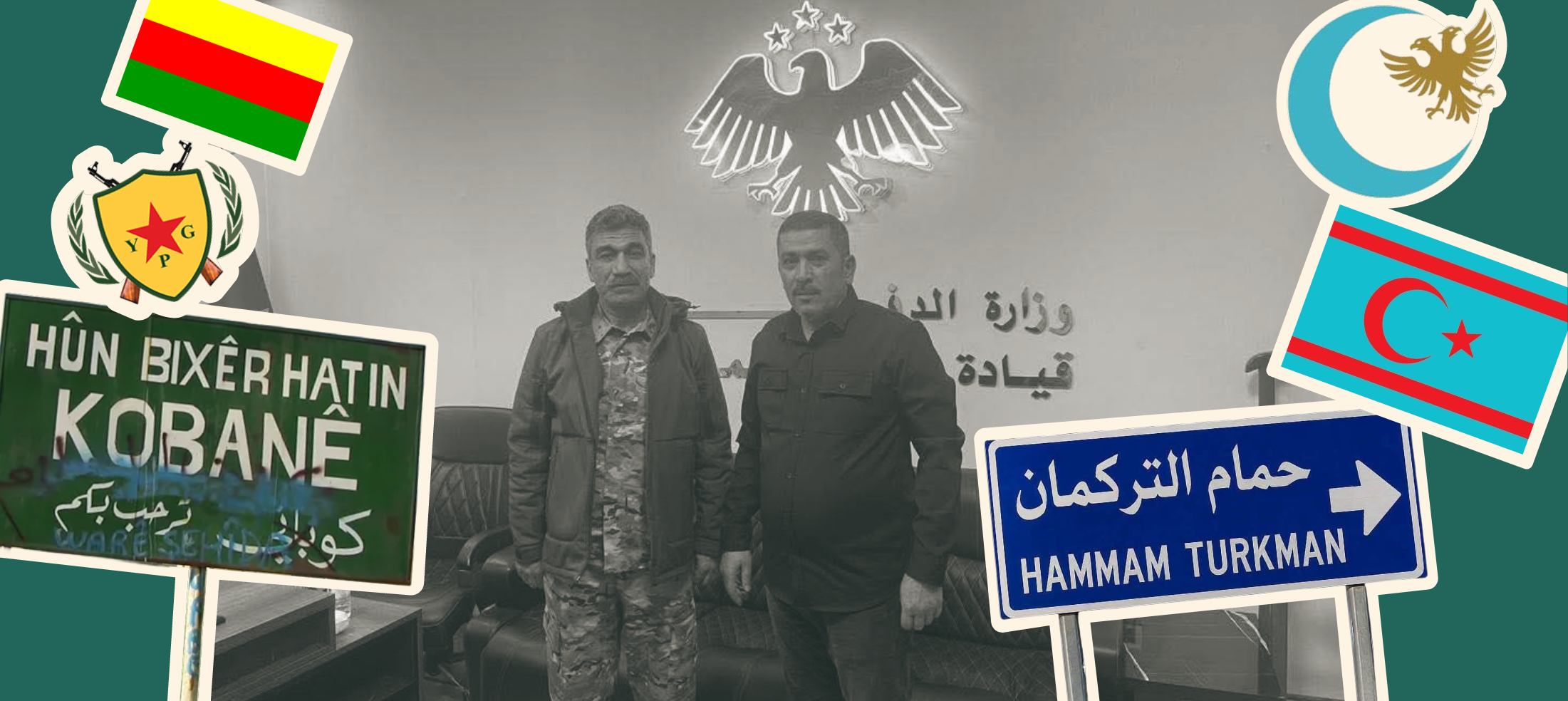
A friendly meeting between Kurdish and Turkmen commanders Sipan Hemo and Fehim Issa would have been unthinkable not long ago. The two men were enemies who spent years fighting on opposite sides of Syria’s war. Yet n April, they sat down together, marking a broader rapprochement between two of Syria’s minorities. The shift remains poorly understood among ordinary Kurds and Turkmens, even as political and military elites from both communities cautiously pursue it.
They fought one another for years. Today, they serve as deputy defence ministers in the same Syrian government. Fehim Issa represents Syria’s Turkmens within the armed forces and is responsible for the Arab-majority north. Sipan Hemo represents Syria’s Kurds and oversees the Arab-majority east. Their meeting in April marked a striking change in relations between two communities that spent much of the Syrian conflict on opposing sides.
The convergence is also visible at the local level. Kurdish civilians recently protested against the government’s use of the official name Ayn al-Arab for the town they call Kobane. During the same week, Syrian Turkmen objected to the use of the official name Tel Hammam for the Turkmen town of Hammam Turkman. After years of mutual hostility, the two communities now find themselves making similar demands of Damascus.
Abdurrahman Mustafa, head of the Syrian Turkmen Assembly and a member of Syria’s new parliament, told Syria in Transition: “We are open to working with the Kurds as we have overlapping interests in 80 percent of our agenda. The 20 per cent difference was in separatist ambitions, but now that difference is waning with the shift in Syrian Kurdish politics.”
Past grievances
Fehim Issa and Sipan Hemo followed very different paths to the same position in government.
Issa, a Turkmen from Aleppo, was among the first rebel commanders to take up arms against the Assad regime. He formed the Sultan Murad faction under the banner of the Free Syrian Army. After Assad fell, Issa was amongst the rebel coalition that appointed Ahmad al-Sharaa president of Syria.
Hemo, a Kurd from Aleppo, was a senior figure in the YPG, the Syrian branch of the Kurdistan Workers’ Party, or PKK. He rose through the ranks of the YPG-led Syrian Democratic Forces. Following the integration agreement between Damascus and the SDF, Hemo was appointed deputy defence minister.
Their meeting in April was remarkable because the two men had spent years fighting on opposite sides in some of northern Syria’s fiercest battles. In 2016 Hemo’s forces, supported by Russian air power, cut the principal supply route used by Issa and other rebel factions into Aleppo. Two years later Issa was among the leading rebel commanders who captured Afrin with Turkish support, while Hemo oversaw the area’s defence. Issa described Hemo as a terrorist. Hemo called Issa a mercenary.
Their personal hostility reflected deeper conflicts between the communities they represented.
Syrian Turkmens generally viewed themselves as natural allies of Turkey. They were also the only ethnic minority whose principal political and military organisations supported the Syrian opposition throughout the uprising. Turkmens played an important role in both the political and armed struggle against Assad and paid a heavy price. Turkmen-populated areas of northern Latakia, particularly the Turkmen Mountains, were emptied by regime forces, Iranian-backed militias and Russian air strikes.
When Turkey intervened militarily in northern Syria against Islamic State and the YPG in 2016, many Turkmen fighters joined the operation as a matter of course. They also participated in Turkish-backed campaigns against the Kurdish-led SDF in 2018 and 2019. Over time, their influence within the armed opposition grew. By the time Assad was overthrown, Syrian Turkmen commanded the Sultan Murad Division, the Sultan Mehmed Fatih Division, the Jabal Islam Battalion, the Hamza Division, the Vakkas Brigade, the Second Coastal Division, the Muntassir Billah Division and the Malek Shah Division.
Syrian Kurds meanwhile followed several different political and military paths. Some joined rebel groups such as the Levant Front, Hayat Tahrir al-Sham and Ahrar al-Sham. Others formed the Roj Peshmerga, which remained largely exiled in Iraqi Kurdistan. The largest Kurdish military force was the YPG, which Turkey and many Syrian opposition groups regarded as the Syrian branch of the PKK.
Some Kurds fought alongside Turkmen and Arab rebels against both Assad and the YPG. Yet the principal Kurdish armed force remained one of the Turkmen factions main enemies, second only to the Assad regime.
The divide extended into opposition politics. When Turkey supported the inclusion of Syrian Kurdish parties close to the Kurdistan Democratic Party (KDP) in Iraqi Kurdistan within the Syrian National Coalition, Turkmen representatives opposed the move. Even after the Kurdish National Council (KNC) joined the coalition, Turkmen politicians continued to accuse it of seeking autonomy in Syria. The KNC, for its part, distrusted the Turkmen representatives and regarded them as proxies for a foreign agenda rather than independent Syrian actors.
Dawn of a new era
In June 2026, the Syrian Turkmen Assembly organised a conference in Damascus to discuss minority rights and the political demands of Syria’s different communities. Representatives of the Kurdish, Syriac, Assyrian, Circassian, Ismaili and Christian communities were invited and seated in the front row.
The Kurdish delegation included Ibrahim Biro of the KNC and, more surprisingly, Dr Abdulsalam al-Ahmad from the Democratic Union Party, or PYD. An encounter between senior Kurds and Turkmens that would once have appeared inconceivable passed largely unnoticed.
This rapprochement has emerged from the political realities created by Assad’s fall; and Syrian Kurds and Turkmens now face several similar challenges in their dealings with Damascus.
Both communities have demanded the appointment of local officials drawn from their own populations. Turkmens, for example, protested against the appointment of an Arab administrator to the predominantly Turkmen town of al-Rai. In that case, Damascus relented; but worries about Arab domination persist. Both Turkmens and Kurds, speak mother tongues other than Arabic and seek representation in the state bureaucracy as well as guarantees for their cultural and linguistic rights.
Kurds secured formal recognition of their cultural and linguistic rights through a presidential decree issued in January 2026. Turkmens have received no equivalent measure. Both communities nevertheless want their rights to be protected in the new constitution. They also support changing the country’s official name from the Syrian Arab Republic to the Syrian Republic.
Demography poses a further challenge. Turkmens are dispersed across several parts of Syria and hold only seven seats in the new 210-member parliament. Kurds are concentrated in a smaller number of regions and hold ten seats. Neither group, by itself, has enough representation to exert significant influence over the drafting of Syria’s constitution . A parliamentary alliance among minority representatives could give them greater leverage.
Similar calculations are taking shape within the armed forces. Sunni Arabs form the dominant bloc in the new Syrian army. Sunni Turkmens and Sunni Kurds are the only minority communities represented in significant numbers.
According to a Turkmen commander serving in the Syrian army, who spoke on condition of anonymity, SDF commanders undergoing integration have begun reaching out to Turkmen officers. Their aim is to create a counterweight to Arab dominance within the military establishment.
A new alliance?
Kurds and Turkmens carry a long history of mutual grievances. Perceived Kurdish separatism and the PKK’s influence in Syria that runs counter to Turkey’s interests and those of its allies have always been the key sources of disagreement. The integration agreement between Damascus and the SDF, together with the PKK disarmament process in Turkey, has begun to alter those calculations. Kurdish figures who once favoured separation are gradually scaling back their ambitions. Turkmen leaders, in turn, are becoming more willing to engage with Kurdish actors they previously dismissed as terrorists.
The direction of this emerging relationship remains uncertain. Resistance within both communities could slow the rapprochement. External developments, including the possible collapse of the PKK disarmament as part of the wider peace process, could bring it to an abrupt end.
For now, Syrian Turkmen leaders are presenting the Kurds and other minorities with a clear proposition: to combine their shared interests and establish a stronger political bloc in Damascus to stand collectively against Arab domination.
The Turkmens believe they are well placed to lead such an alliance. Their factions played a prominent role in the uprising and developed close relationships with the new ruling elite. They also enjoy the support of Turkey, which retains considerable influence in Syria.
The Kurds bring a different set of assets to the table. Their position is strengthened by the SDF integration agreement, Ahmad al-Sharaa’s presidential decree on Kurdish rights and their longstanding relationships with Western capitals.
During the war, Syria’s Turkmens and Kurds were on opposite sides. The struggle to secure influence, representation and constitutional protection in the new Syria is now drawing their elites towards each another.