Palmyran wisdom
How one city is turning anger over Assad cronies into a local experiment in transitional justice
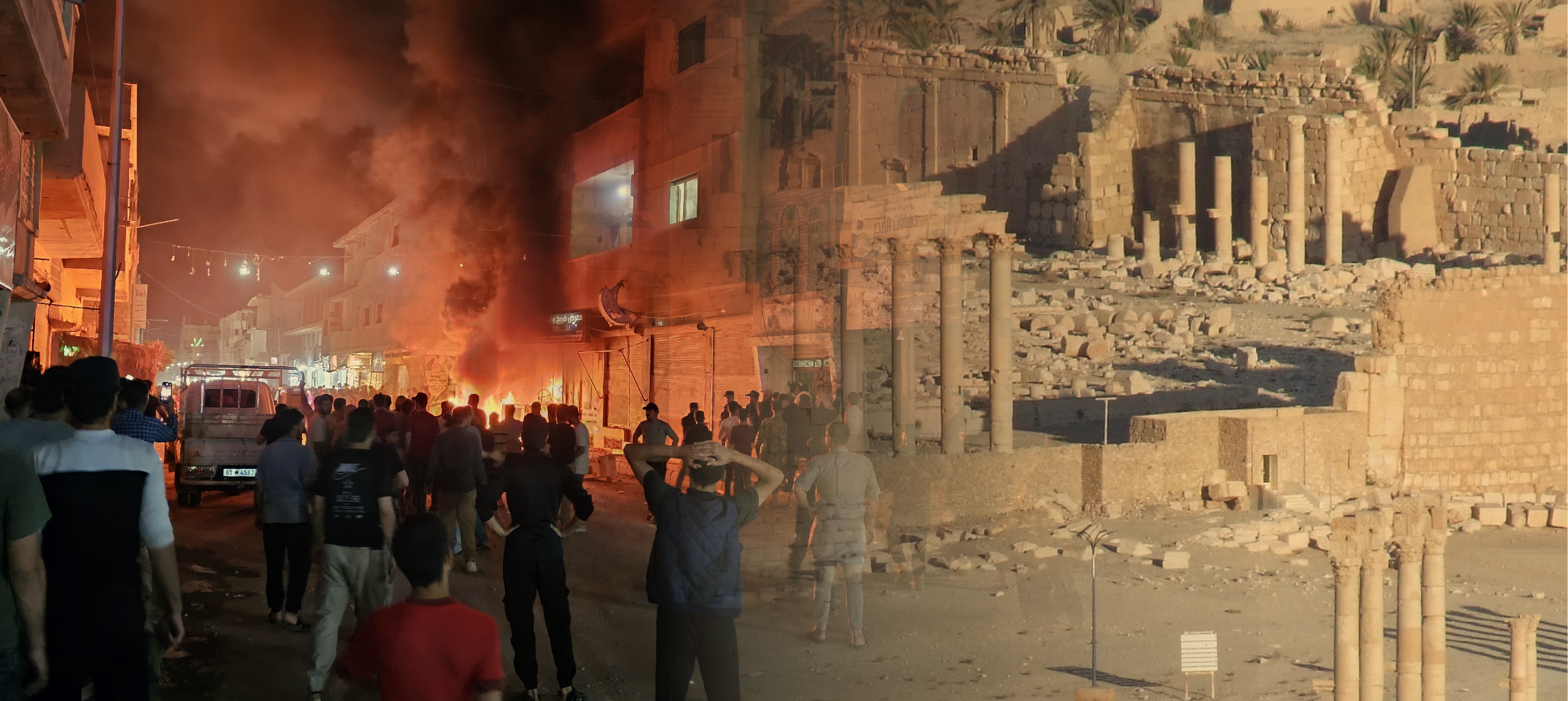
On 15 June the ancient city of Palmyra took to the streets. Residents who had returned to battle-scarred neighbourhoods wanted those they call “shabiha” (Assad cronies) held to account, and some measure of justice after years of displacement and financial ruin. The first chant in the protest was blunt: “Palmyra is free, the shabiha must leave.”
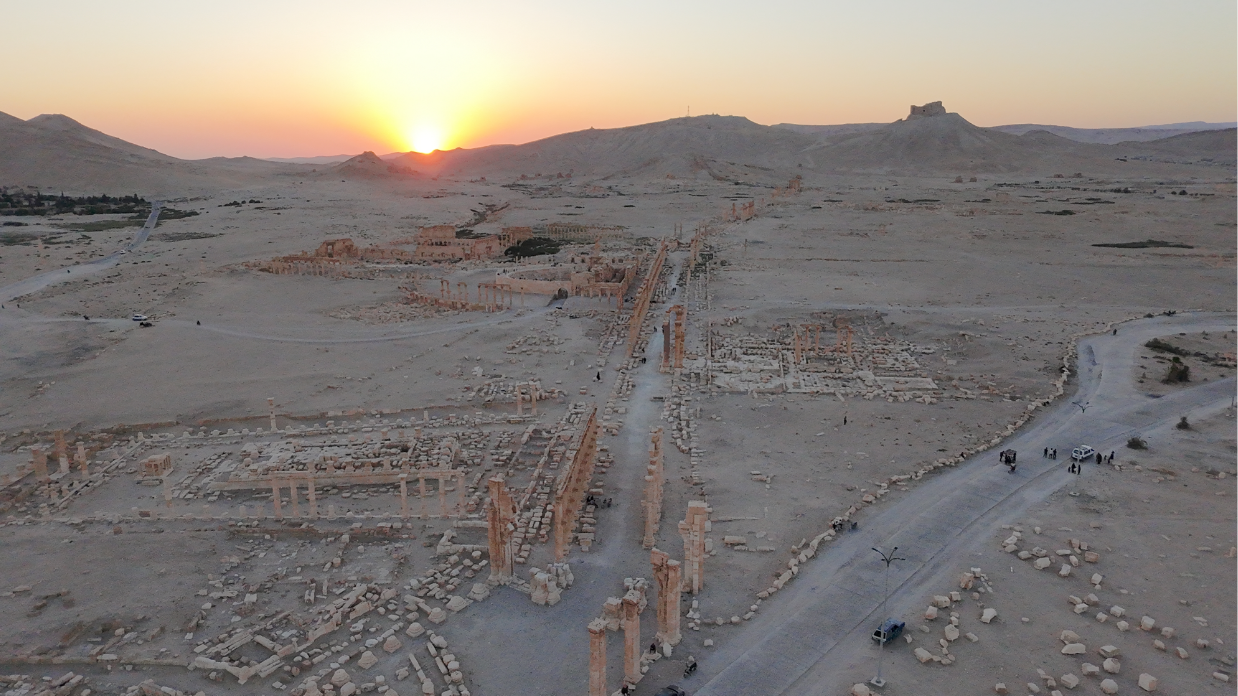
During fierce fighting between the Syrian army and ISIS in 2014-16, most of the city’s residents fled. Some went to the opposition-controlled north, and from there to Turkey; others less fortunate ended up in the miserable Rukban desert camp. Returning in large numbers after the fall of Assad, these refugees found their homes and businesses looted, destroyed or occupied by someone else.
A small, mostly well-off class, did not flee Palmyra. These were the ones who cooperated with the regime’s security apparatus, informing on fellow Palmyrans to win influence and favour. Some made fortunes by paying off regime security officials to allow them to exploit land and property belonging to the absent refugees. They thought they would never come back.
City on fire
The returnees had ample reason to be angry; but the seeming impunity enjoyed by shabiha tipped them over the edge. Frustration was sharpened by accounts circulating in the city that wealthy former regime collaborators had for months been paying “fines” to security bosses to stay out of jail. For many returnees, it seemed that those who had benefited under the old regime could once again buy their way out, while those who had been displaced and now had to start from scratch had to fend for themselves.
On 14 June anti-shabiha protests and violence erupted in Idlib, Aleppo, and Damascus governorates. While speculation abounded over who coordinated the simultaneous protests and to what end, the following day the Palmyran returnees staged their own copy-cat protest. The goal was “to make the voice of the revolutionary street heard”, according to one participant. The actual demand, chanted and openly discussed, was for a tribal form of punishment: the exile of shabiha families from the city.
As the marching crowd drew close to the home of one of these families, the Furaihs, things turned violent. Insults turned into stone-throwing, and then the inevitable “exchange of gunfire.” Two members of the Furaih family were later arrested and their assault rifles seized. That a reputed pro-Assad family would dare fire upon returnees and challenge their righteous calls for justice, was considered a major act of provocation. “The protest was needed,” said one returnee. “The shabiha were getting too brazen. They needed a rassa,” a roughing-up.
Also present at the demonstration were less justice-minded actors. The mukawy’een, or U-turners, routinely use such events to whitewash their former support for the old regime through exaggerated displays of loyalty to the new one. Others, according to local accounts and observers, were Islamic State elements that saw any disorder as an opportunity to embarrass the new authorities.
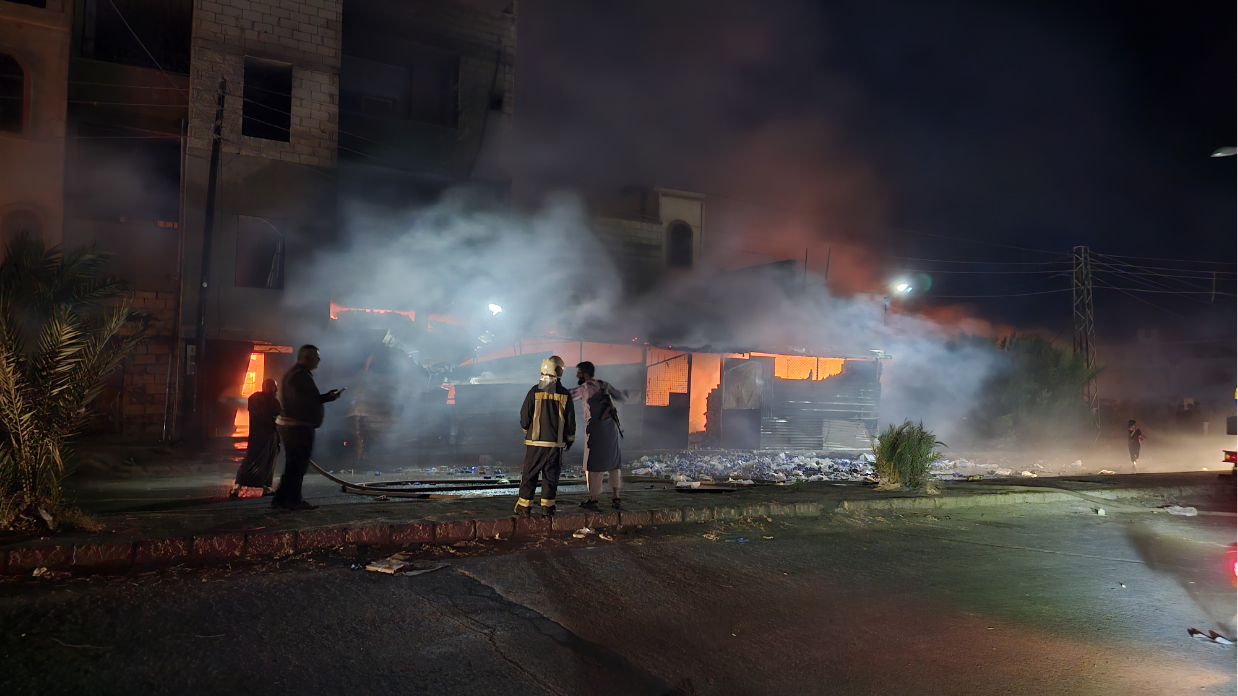
The protest spread: a household goods store belonging to the Furaihs was put to the flame. A rest house belonging to a business partner of an Assad-era intelligence chief was attacked. A car belonging to another alleged crony from the Masharfa clan was burned. Security forces struggled to contain the mob, which by now no longer comprised entitled veterans and middle-aged returnees, but mostly young men not old enough to have witnessed the revolution directly and with no record of anti-Assad activism. Social media was filled with claims, counter-claims and bluster. At one point, the Busaray clan of Deir Ezzor used Facebook to threaten to march on the city in hundreds of SUVs should a business in the city that is half-owned by one of its members be torched.
Breaking the law
Palmyra had already shown itself capable of something quite rare: genuine local consensus. It was in fact the only election district in the country where the entire electoral college agreed unanimously to elect one candidate to represent the city in the People’s Assembly: Mahmoud al-Madoun. Being a respected lawyer from a well-educated family certainly helped; but so did having on his side an active and influential voice in civil society, perhaps the most influential: the wujaha’, or ‘notables.’ These were uncles and fathers: the guardians of local custom.
What happened on the night of 15 June threatened to violate one important custom: that neither revenge nor compensation should be sought directly from the person responsible for an offence. Traditionally, the proper course was to approach his clan or family elders and present the case before them. They would then summon the accused and either defend him against the allegations or, more commonly, mediate a settlement under which he was spared physical harm. Because the grievance over profiteering and other nefarious wartime activities had not been raised formally with the relevant clan authorities, those who attacked the property of the reputed shabiha on the night of 15 June had broken with custom. Due process had not been followed. A violent tribal tit-for-tat looked likely, with malevolent actors like Islamic State taking advantage. Chaos threatened.
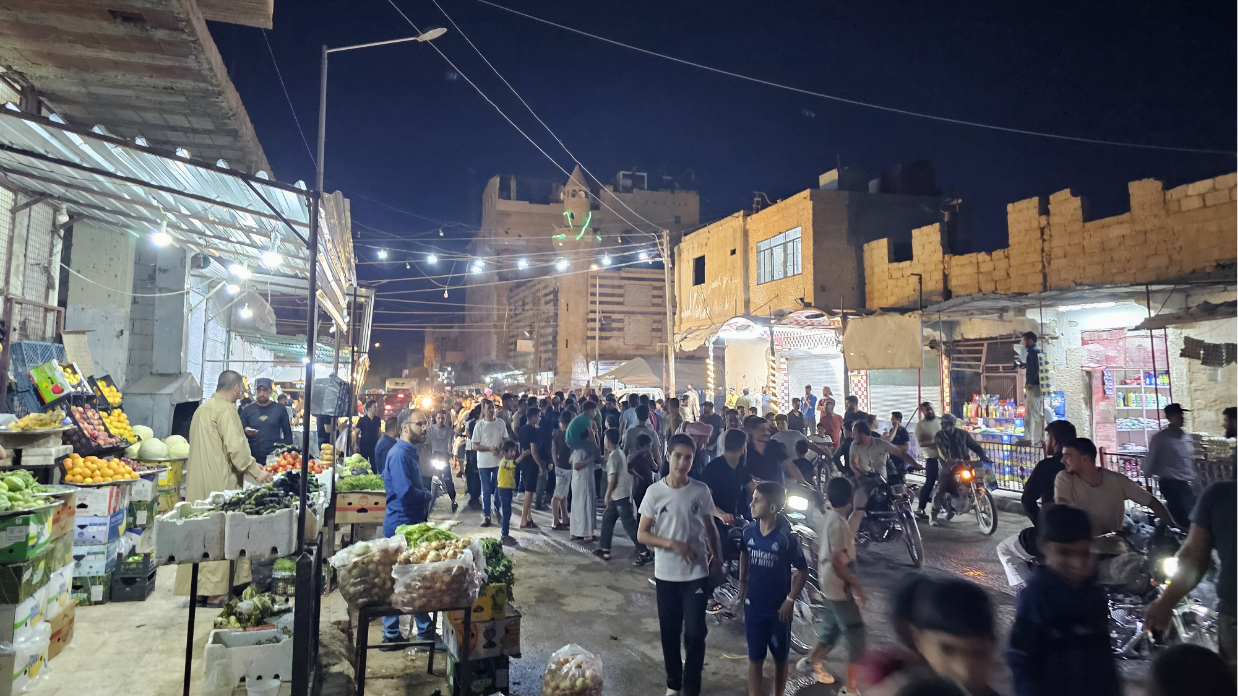
On 18 June the wujaha convened an urgent meeting at the Palmyra Museum with the principal security authorities, Internal Security (aka General Security), and the Syrian army’s 42nd Division (the local unit), to seek a lasting solution. Naturally, exile was high on the agenda. The initial suggestion was for the expulsion of ten shabiha, together with their families. The proposal, however, quickly unravelled once its practical consequences were considered: who would choose the ten names? Why them and not others? What about those who had amassed money and influence, then left the city? What about women and children? Would Palmyra accept exiling its own families, then reject families exiled elsewhere if they were sent to Palmyra?
A committee is born
The matter could not be solved in one sitting. The meeting gave rise to a ten-man committee of notables, security men and soldiers charged with finding a workable solution.
To explain the committee to a WhatsApp group of concerned citizens, one elder wrote:
"Under the supervision of the Internal Security office, the ten-member committee, including a representative of the 42nd Division, will examine the cases of shabiha and those accused of supporting the former regime, according to defined rules and procedures."
The emphasis of the committee’s meetings quickly shifted towards fines and financial settlements imposed on those who had accumulated wealth through shabiha activity: not unlike what happened to business magnate Mohammad Hamsho.
The committee elder laid out the argument thus:
“The state already appears to follow a policy of making use of the wealth accumulated by the regime’s financial shabiha. Those who plundered the country’s resources should be fined, with the proceeds invested in public services. This would help revive the devastated city, where the state, in its present condition, is unable to finance any projects. A financial fund linked to the committee will be established to help improve the city’s dire conditions. This is a highly promising initiative, unprecedented elsewhere in the country, and could bring considerable benefits.”
Redistributive justice
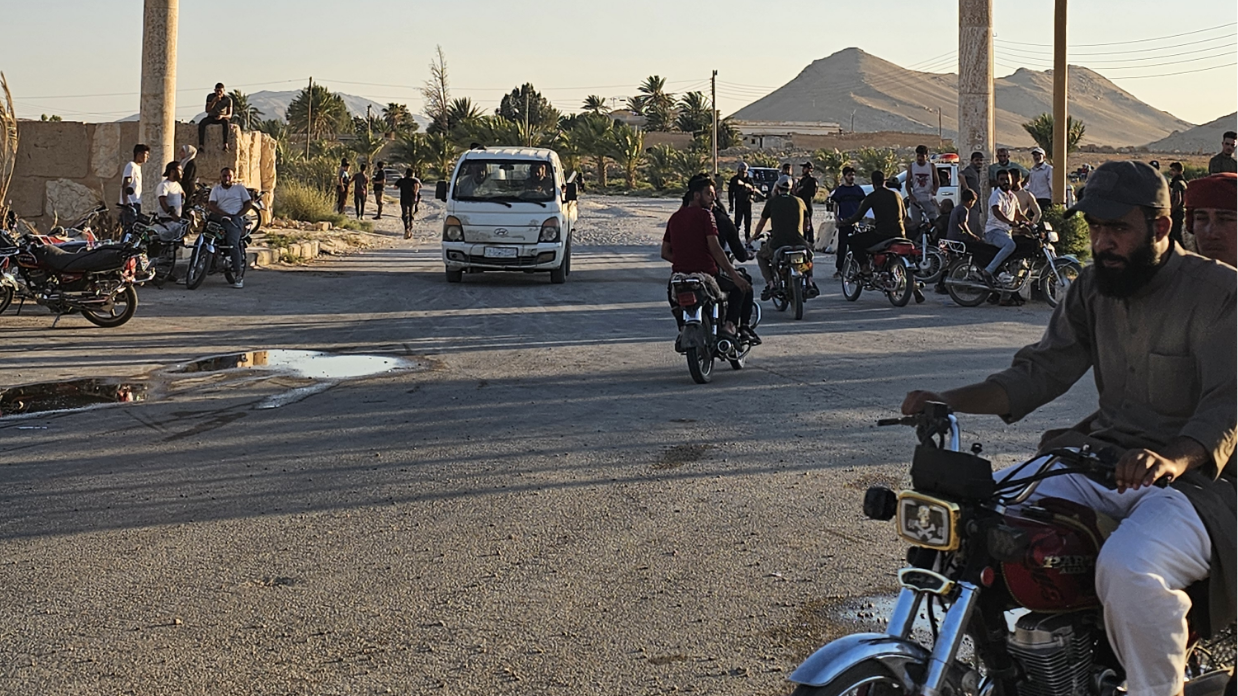
Comprehensive individual compensation is almost impossible in a place like Palmyra where property claims overlap and the damage is huge. Putting fines into a local fund for services and infrastructure turns at least some of the money accumulated during the war into public benefit. The thinking goes that those who sided with Assad and enriched themselves at the city’s expense should help pay for its repair; and they would be left alone once they had settled their dues transparently and through the proper channels. Such arrangements, however, apply only to those accused of profiteering and of non-violent support for the Assad regime. It did not cover murder, torture, rape or informing that led to someone’s detention, abuse or death.
The committee resolved that those with blood on their hands would be referred to a newly-established “special office” within Internal Security. An investigation would be opened only when presented with a specific complaint and supporting evidence. This could lead to legal action. Yet families and clans are often reluctant to accuse one another formally, fearing that matters could escalate into violent feud. Legal proceedings, meanwhile, also impose costs on both sides and risk becoming a battle lasting years.
What Palmyrans are saying is: if the state cannot deliver on transitional justice through the courts, the returnees and veterans will find other ways. Most would prefer a financial settlement reached through customary mediation overseen by competent state authorities (Interior and Defence), than a cumbersome legal process of uncertain outcome involving Assad-era judges.
Way to go?
As of 12 July, the Palmyra committee consisted of notables Mohammed al-Qash‘am, Abu Bilal Qanbar, Nader al-Shu‘ail and Jumaa al-Madiha. Four other notables had yet to be announced. Omar Juma’a, chief of staff of the First Brigade, was the 42nd Division’s representative on the committee. Sufian Abu Jaber, Palmyra’s Director of Internal Security, was expected to appoint his own representative as the committee’s tenth member. “A meeting is expected to take place in the coming days with the Internal Security chief to discuss the committee’s structure, finalise its membership and establish formal working procedures,” said a returnee veteran.
Some residents say Internal Security has been slow and bureaucratic in its dealings with the committee, seeing this as an attempt to “placate the street and delay a definitive resolution”, in the words of one cynical returnee. But perhaps the caution is warranted. The initiative requires coordination with government institutions and, crucially, a workable definition of who qualifies as a “shabiha”. There are killers, informants, thieves and financiers. But there are also former state employees, traders who adapted to those in power, and relatives who protected members of their own families. Leaving such distinctions to the street and the social media mob would produce retribution rather than justice.
The Palmyra committee offers an alternative, however imperfect. It brings together local notables and veterans — in effect, civil society — with representatives of the security forces and the army to create a local transitional justice mechanism with at least basic procedures and mutual oversight. In a country where the formal transitional justice process remains slow and its credibility uncertain, such improvised arrangements may help keep social tensions in check and allow some form of reconciliation to take place.
But the experiment also exposes a fundamental dilemma. Reliance on customary mediation and financial settlements favours those with enough money to buy their way out of meaningful accountability. It may also weaken the official National Commission for Transitional Justice, whose seriousness and effectiveness remain open questions.
Palmyrans, however, cannot wait indefinitely for those questions to be resolved. Faced with anger among returnees, the threat of communal violence and a state justice system unable to provide timely answers, they are constructing a transitional justice process of their own — with the participation of state security and military institutions. In doing so, Damascus is not merely tolerating an improvised local solution that sidelines legal institutions; it may even be testing an approach to transitional justice that could be rolled out elsewhere.