Get Rich or Die Tryin’
Syria’s government is pursuing a morally questionable economic policy that’s already faltering
Back in 2016, when the Assad regime imposed a murderous siege on a town 45 km northwest of the capital, a hashtag appeared: “solidarity with the siege of Madaya.” But the pictures that accompanied the hashtag showed people with sumptuous-looking spreads of food including kebabs, grilled fish, chips, salad and mountains of bread. It was in fact solidarity with the army and Hezbollah that were doing the besieging. It was another episode in a civil war in which some Syrians appeared to revel in the suffering of others.
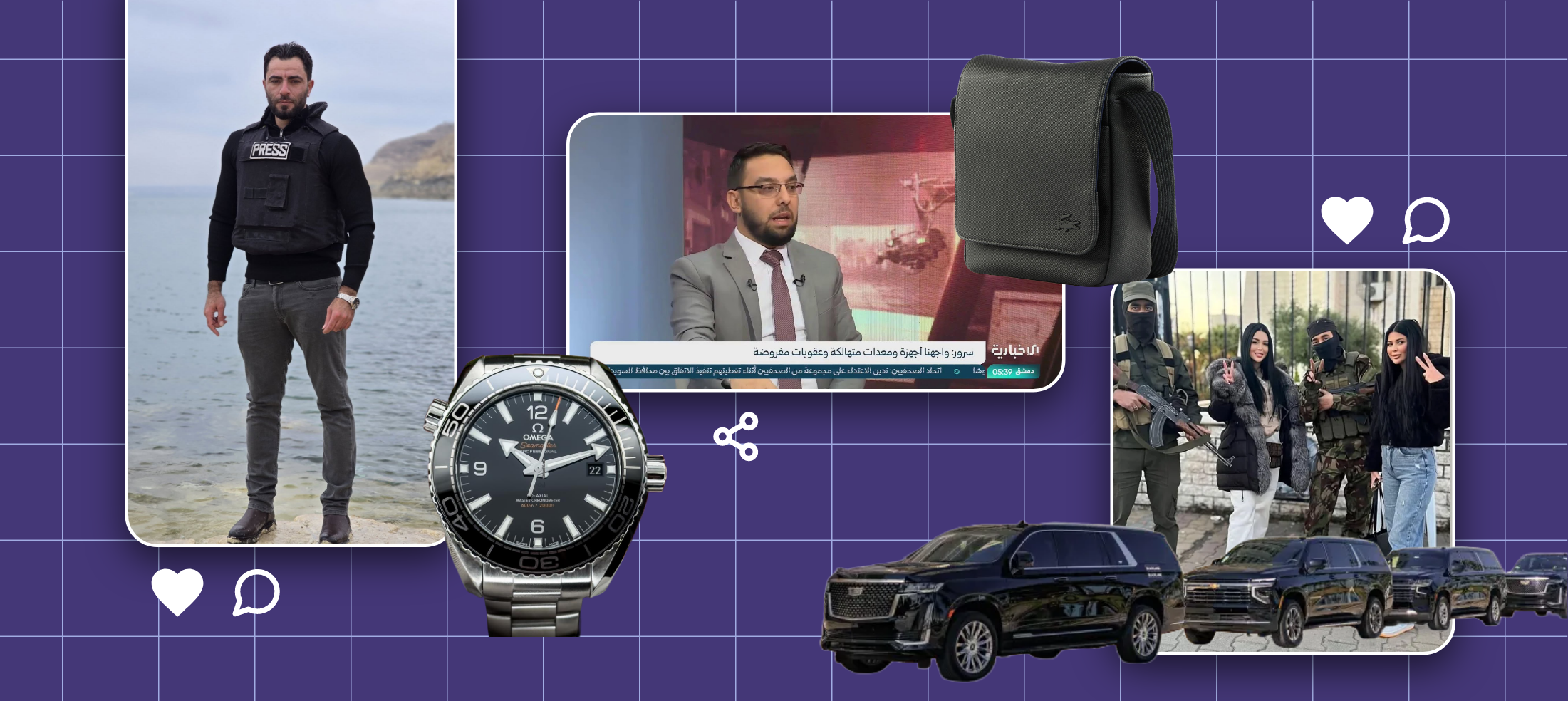
Callousness, cruelty, lack of empathy: “These are the morals of Assad supporters!” was the cry from the opposition camp. Fair criticism, of course. Yet a decade later, a similar callousness is evident among some of the very oppositionists who voiced their outrage then and now hold power. Take Musa al-Omar, the government’s favourite social media influencer. In 2016, he tweeted furiously – and rightly so – about the siege of Madaya. In 2026, however, he had this to say about the massive hike in electricity prices: “There will soon be pre-paid meters installed in 6.5m homes. If you can afford it [electricity], buy it. If you can’t, tough luck!”
Consumption culture
A millionaire in his own right, al-Omar has become a totem for a brand of neo-liberal capitalism that’s all the rage in Syria. On social media, he advertises luxury housing projects where the cost of one square metre ranges from $1,100 to $1,200. A small apartment will set you back at least $150,000, not counting service charges. “A reasonable amount” he commented, amid a fuel price hike that forced many Syrians to abandon their cars. The average annual salary of a school teacher in Syria stands at $2,706.
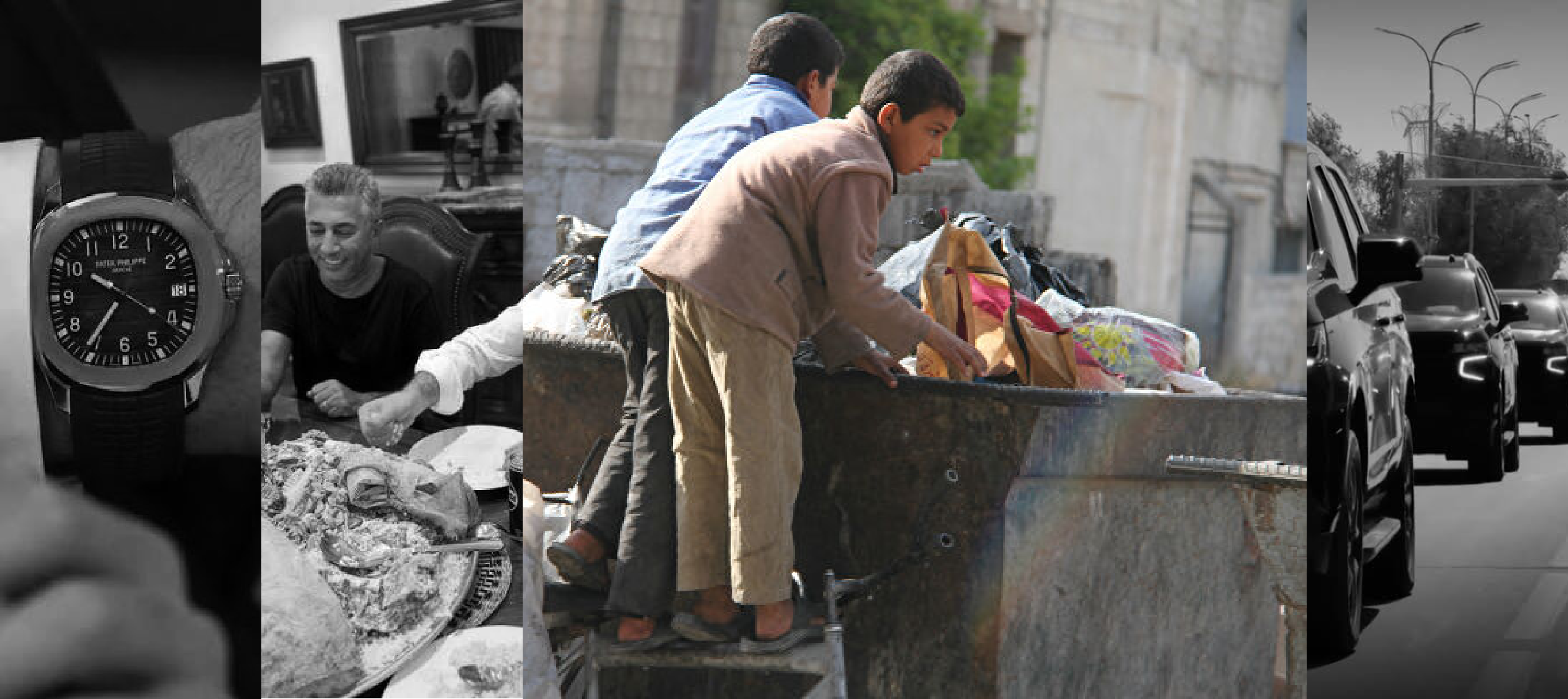
Take also the case of the Minister of Religious Endowments, Mohamad Abu al-Kheir Shukri, who showed up to the opening of a mosque in Latakia in a motorcade of gas-guzzling American SUVs, then sat down to a feast of mansaf, served on golden trays so heavily laden that each required two men to carry it. Another case involved the recent opening of the luxury brand outlet Fashion Gate Mall in Damascus, an event attended by no less than three serving ministers. You’d think they’d be too busy with rising inflation and a cost-of-living crisis. A few days later, Syria’s president Ahmad al-Sharaa paid a low-key visit to the same mall.
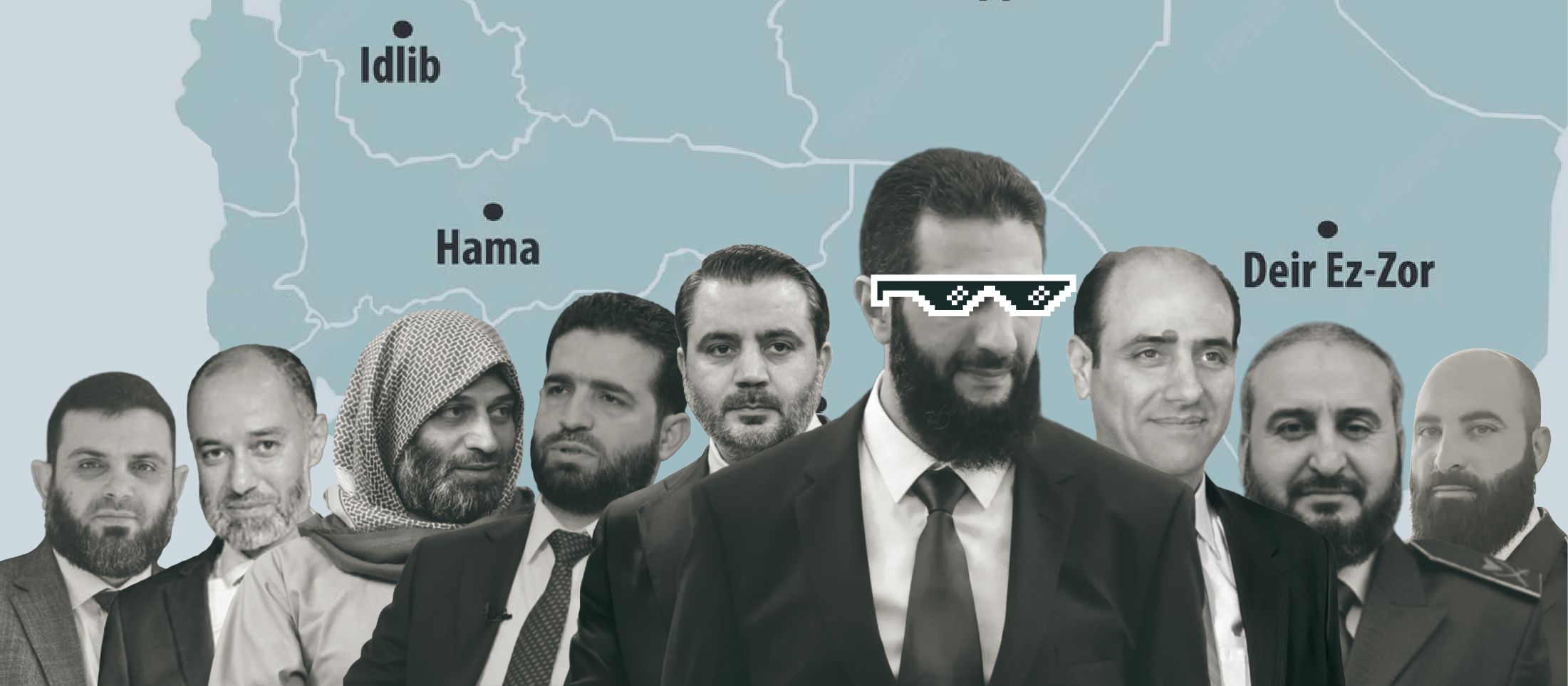
Anyone familiar with Hay’at Tahrir al-Sham’s Idlib experiment will hardly be surprised by the Dubai-style consumerist culture on display. The Salvation Government’s economic policy was predicated on monopolies and import duties. Its visible achievements were malls, restaurants, car showrooms and housing complexes that catered to the well-off. It did generate employment opportunities for some of the poor, and encouraged Syrians to invest at home rather than in Turkey, but raised prices and inequality considerably. It was an experiment in trickle-down economics designed to appeal to the rich, or those aspiring to be.
The embrace of neo-liberal economics was also a great way to communicate that the group formerly affiliated with al-Qaeda had ‘moved on.’ The Salafi-jihadist ideology that once held the group together may gradually be giving way to the glue of profit. According to informed sources, the Baraka Fund counts thousands of HTS members as shareholders, with shares available exclusively to the group’s members, despite its formal dissolution. One of Baraka Fund’s most visible investments is Taiba Petroleum, Syria’s number one gas station operator that holds a near-monopoly in some parts of the country. The Baraka Fund in turn is owned by the Namaa Investment holding company, which on its website advertises almost $60m in profits paid out, and a return on investment of 224 percent.
Admitting facts
The official embrace of conspicuous consumption and free market wheeling and dealing at a time of economic crisis sits uneasily with the state of the country at large. The overnight removal of state subsidies and the erosion of the Syrian pound’s purchasing power have compounded the economic decline of the past 15 years brought about by war and mismanagement. Defenders of the current approach will say that Syria needs to send an ‘open for business’ message to draw in Gulf investors. They’ll also say that Syria needs to get over its socialist command economy legacy by embracing free market shock therapy, even if it means bad optics and bad taste. That’s certainly an argument that can be had in a ‘normal’ country trying to develop. But in a country where the government lacks a democratic mandate and a clear programme for economic recovery, where the cost of basic needs is on a par with that in Turkey, where the median annual income is almost eight times that of Syria, and where the socioeconomic question is compounded by security and sectarian tensions, the time is nigh for a rethink.
The government’s current economic policy is predicated on promises of billions of dollars in aid and investment that have yet to materialise. Saudi Arabia, one of the much-touted sources of cash, has given the government a total of only $60m in direct support so far, according to informed sources. Its citizens are still barred from travelling to Syria for tourism except with the explicit permission of its security authorities. Minister of Emergency and Disaster Management Raed al-Saleh recently said that the international community had “failed Syria” for 14 years and continues to do so by holding out on reconstruction aid. That admission is welcome, and it is hoped that more officials will have the courage to confront their citizens with the possibility that the model for reconstruction pursued so far might not work. The 28 September decision by President al-Sharaa to cut unnecessary spending and institute belt-tightening across government departments might be good for optics, but it is also an admission that something needs to change.
Begin with a new slogan
In the aftermath of the First World War the slogan of “a country fit for heroes” was coined by British Liberal Prime Minister David Lloyd George. It inspired the Housing and Town Planning Act of 1919, which gave local authorities funding to build hundreds of thousands of public homes for the working class. Syria needs a similar slogan that conveys optimism about the future and a duty towards those less fortunate. Inevitably, it will involve large-scale borrow-and-spend policies by the government to restart the economy and get reconstruction of low- and medium-income housing underway. Luxury malls and gated communities alone aren’t going to cut it.
The current approach, meanwhile, is best captured by the title of 50 Cent’s 2003 album, Get Rich or Die Tryin’. For the 90 percent of Syrians struggling to survive, that leaves a far greater prospect of death than of riches.