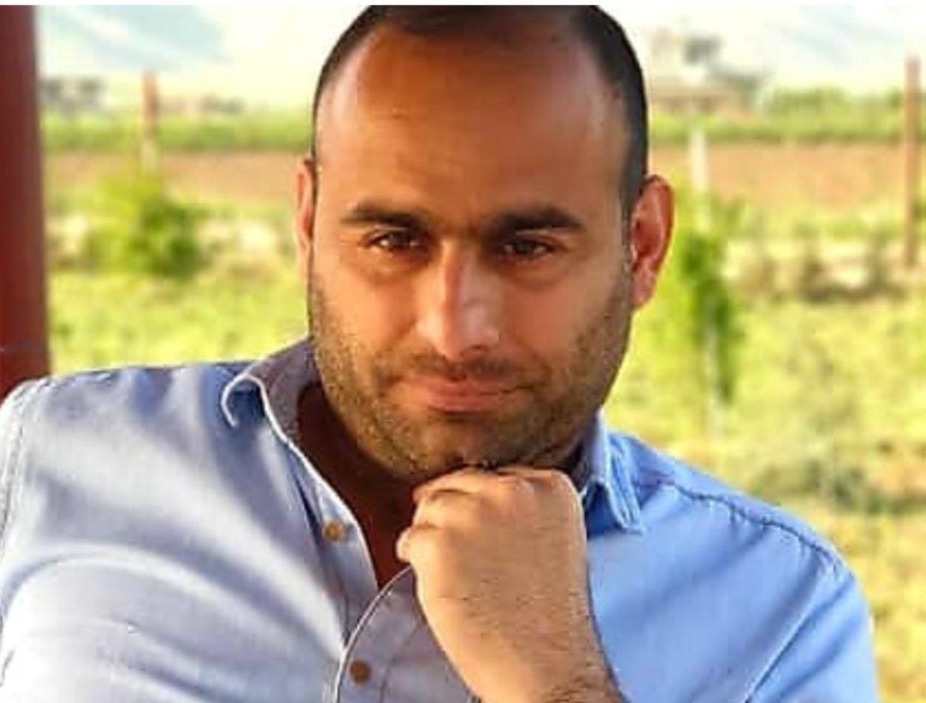
Ghassan Abboud and the search for recognition
30. April 2026
In today’s Syria, everyone wants recognition. From billionaires to forgotten defectors and anonymous survivors, the struggle over who deserves honour for their participation in the revolution is getting increasingly public – and fractious.
The recent video by Syrian billionaire businessman and philanthropist Ghassan Abboud, owner of the defunct Orient TV, brought to mind President Ahmed al-Sharaa’s visit to Berlin and the argument over which Syrians deserved to accompany him and meet him. It revived an old question: who are you, and what did you do for the revolution to earn the honour of standing beside the President?
Abboud, standing rather than sitting, unburdened himself to the public in response to accusations that he had failed to honour financial promises and patriotic donations. He said he still held the invoices and figures proving how much money he had given to the revolution. Yet he remains wanted by the Syrian authorities. Assad-era warrants are apparently still in force. Some claim Bashar al-Assad still rules the country in spirit, and that Sharaa merely drives the same old Syrian vehicle.
A revolutionary government, one might have thought, would have turned the page and forgiven old offences. After all, it has pardoned men of wealth who supported Assad to the hilt such as Samer Foz, Fawaz Akhras and Mohammad Hamsho. Abboud is hardly comparable to them. They stood on the other side. Nor is he alone. Defectors complain that their names still sit on wanted lists, and that returning home means enduring bureaucratic ordeals and administrative harassment. It is no longer the security state, thankfully, but it remains unpleasant.
Abboud then followed with a second video, as long as the first or longer, defending Idlib, the citadel of the revolution, whose sons are accused by residents of other Syrian cities of monopolising public office. He said the young men of Idlib – where there is scarcely a household without two or three martyrs – had gained little from the revolution’s spoils beyond guarding the wooden huts placed outside security sites.
Thousands of heroes
During the Syrian President’s visit to Germany, invitations were extended to Syrian-German activists – a phrase as awkward as saying Turkish-Syrians – or at least to those with influence and standing in the revolution. Many were social media personalities, known for pranks and online antics, who had won fame and favour.
They then quarrelled online over who most deserved the honour of meeting the President. In the age of blue ticks, anyone absent for a day is forgotten. Modern fame has the lifespan of a butterfly.
Ghassan Abboud is well known. But where are the obscure heroes of the Syrian revolution, the tens of thousands whose names have faded? One might mention Ayman al-Aswad, Najati Tayara, or Sheikh al-Sayasneh. They have become yesterday’s news.
Abboud also criticised the government, listing undeniable shortcomings. He claimed the Sharaa family now rules Syria, and that the President’s two brothers – one formerly resident in Russia, the other in Erbil – had little or no role in the revolution, yet now function as prime minister and economy minister in all but name.
Some replied that Abboud was merely seeking office. He owned Orient TV, which for years gathered writers and activists in exile and gave them livelihoods. At one point he even built a wall bearing his own portrait in imitation of Assad. Some said that was his right: it was his own money, earned abroad, not money stolen from the Syrian people. Perhaps he seeks a position, a title, or a tribute never granted. He had reportedly asked the new leadership to honour the Orient staff. It did not oblige.
Abboud also spoke of his support for sport and his willingness to buy a football club. He was told that the law governing football clubs has yet to be issued. Nor has the law on political parties. Nor the law on associations. This, they say, is a transitional phase. To the observer, it can look more like a glacial one.
Everyone wants recognition
There is also the case of a defected former MP who returned home and appeared in a video complaining through tears. He had broken with the regime early, sacrificed his seat, and fled to Canada, where he sold coffee in the streets. Upon returning, he wanted only one thing: recognition.
These are men of old political influence or newly acquired wealth. But the heroes of the revolution number tens, even hundreds, of thousands. Some are dead; others still wait for acknowledgment. Anyone who once wrote an insult about the regime imagines himself a freedom fighter. Even Izza al-Sharaa is counted heroic by some, simply because she never praised Assad. If everyone who refused to applaud Assad is a hero, what then of those who risked their lives, or opened their wallets like Ghassan Abboud and others did for their fellow Syrians?
A photograph with the President is now considered an honour, a certificate to treasure. Under Assad, a photograph with the ruler could save a man from disaster; it was a magical charm. Yet recognition can take other forms: a commemorative stamp, a medal, a street name, a photograph in the newspaper, a roll of honour. Syria’s early revolutionary coordination committees once understood that much.
We said the heroes numbered in the hundreds of thousands. As for those who died, they received the highest prize of all: martyrdom.
Shrapnel in the body
Not long ago, a Syrian man walked through the electronic security gate at Istanbul airport. The machine wailed at the presence of metal. Officials took him aside, stripped him in a private room, and made him squat and move like a duck. They eventually discovered that some twenty fragments of shrapnel were lodged beneath his skin, transformed into part of his body.
He had never claimed heroism. He sought no office. He had no social media page. He had never received a single “like” in his life – save the admiration of the electronic gate, and its shrill applause.