The year of the two generals
Neither victor nor vanquished, Syria’s leaders edge towards shared rule
Two rival commanders-turned-politicians now dominate Syria’s uncertain transition. Their continued rivalry in 2026 could either plunge the country back into conflict, or force a long-delayed change in political culture.
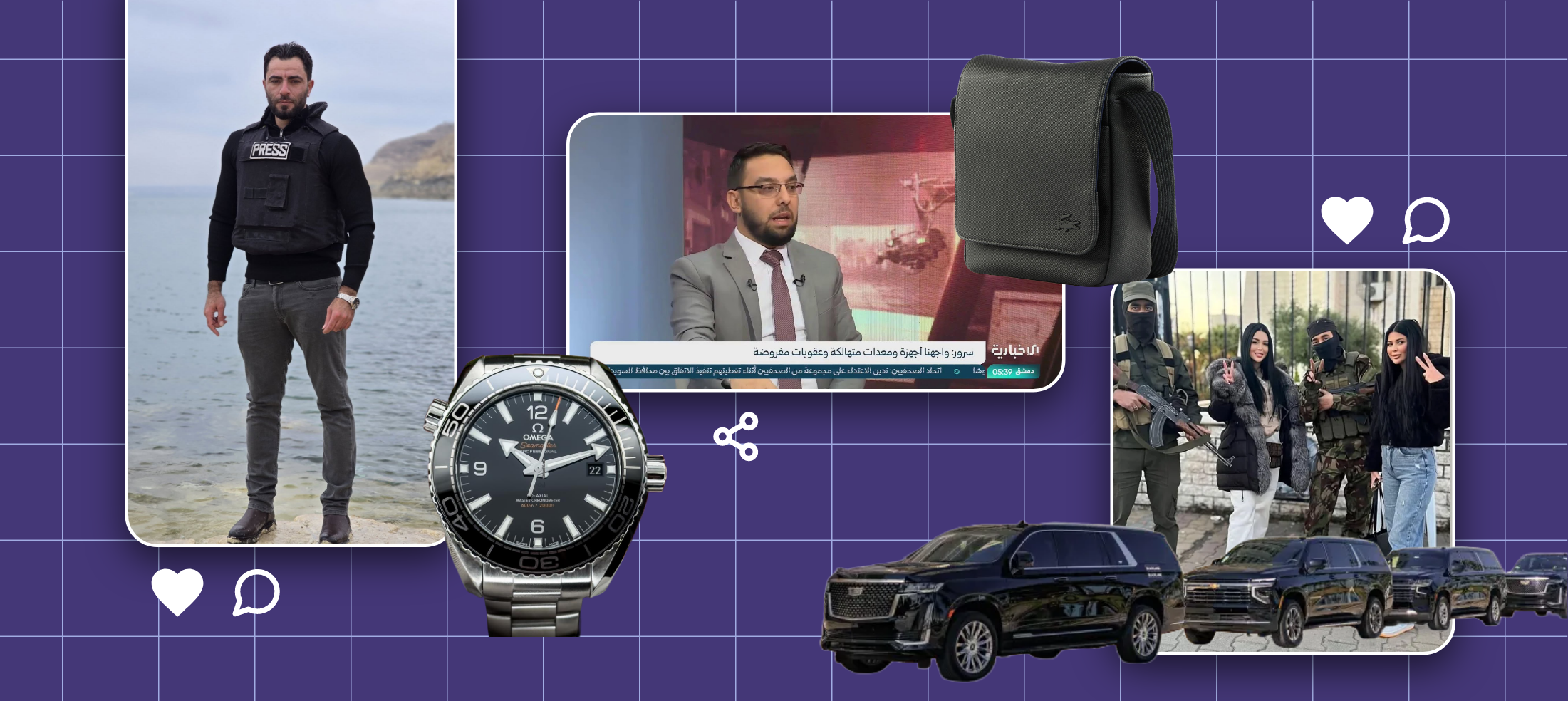
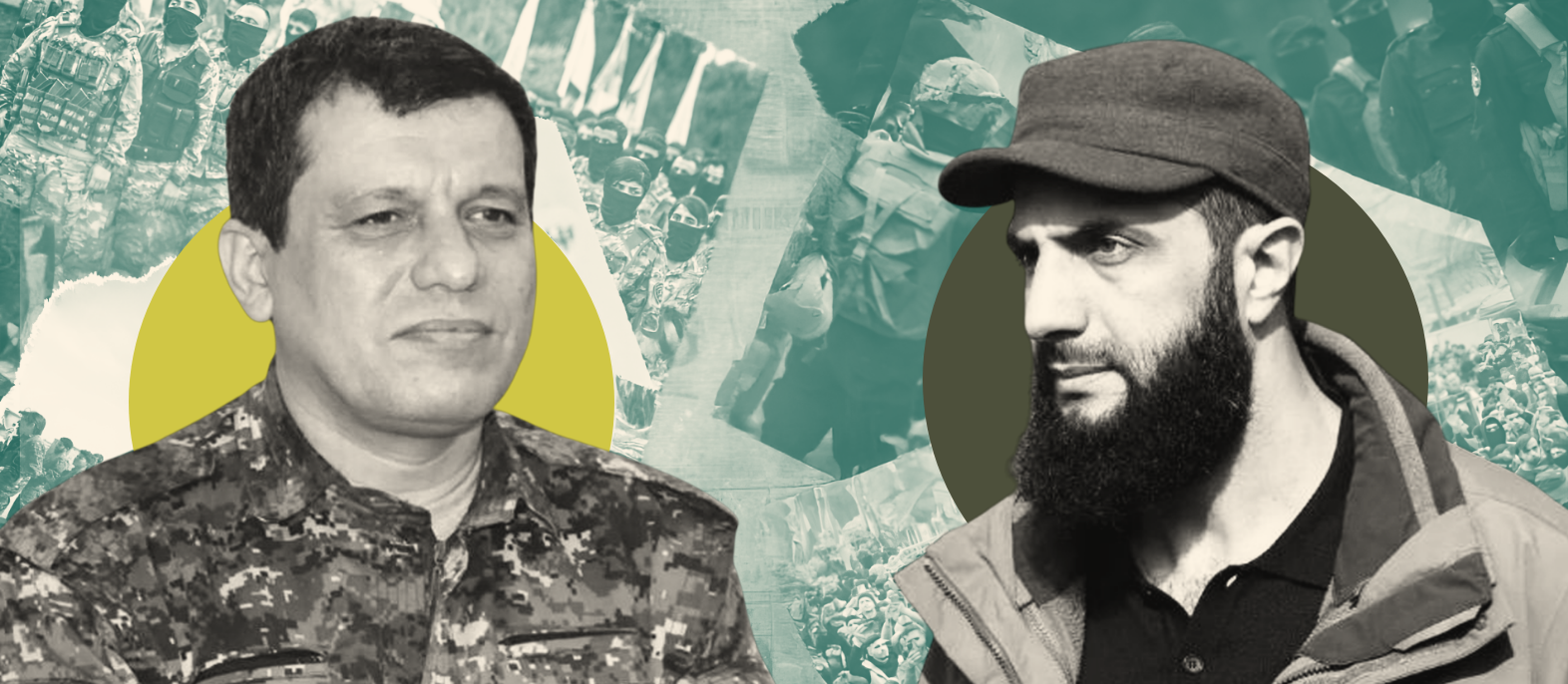
Two men, who outwardly could hardly be more different, hold Syria’s future in their hands. President Ahmad al-Sharaa is charismatic and extroverted, fond of Swiss watches and swagger. General Mazlum Abdi, by contrast, is reserved and self-effacing, a product of the austere discipline of the Kurdistan Workers’ Party (PKK). When the two signed an agreement in March last year, Syrians across political and communal lines greeted it with relief. At last, it seemed, sober leadership had intervened to prevent the post-Assad transition from unravelling. Ten months on, that transition remains unresolved, and still rests largely on how these two men choose to handle it.
For all their stylistic contrasts, Sharaa and Abdi share more than is often acknowledged. Each commands a powerful army in the field of similar size; each depends, to varying degrees, on external backing; and each’s authority has yet to rest on popular consent. Doubts about the kind of state that could be rebuilt, and the nature of the society that state would govern, are shared by both.
The depth and coherence dilemma
Sharaa is often portrayed as the political expression of Syria’s Sunni Arab majority. In demographic terms, the claim holds; but not politically. The coalition that brought him to Damascus is wide but shallow, and is bound together by hostility to the old regime and not by consensus on what should follow. Islamists, local notables, former rebels, and habitual fence-sitters play along with Sharaa but are not happy. It is therefore unsurprising that the government in Damascus treats independent Sunni organisations — from the Muslim Brotherhood to the office of the Mufti, dismantled under Assad and only weakly restored under Sharaa — as dangerous rivals.
This also sheds light on Sharaa’s instrumental view of the state. He speaks readily of sovereignty and unity, but treats institutions as vehicles for his political dominance and, if plans hold, the means of entrenching it through presidential elections that confer longevity as well as legitimacy to his rule. Power-sharing arrangements, autonomous centres of authority, and robust parliamentary oversight dilute control over the machinery on which his personal project depends; and it makes him look weak in the eyes of Sunni Arabs. In this sense, Sharaa’s caution towards pluralism and institutional robustness – the centre pieces of a potential deal with Abdi – is mechanical: a state with too many brakes cannot be driven by him very far, or very fast.
Abdi’s problem is different but also similar. He leads the most disciplined armed force in the country outside Damascus, but the areas his administration governs are largely Arab. Kurdish-led rule has endured because it has been underwritten by US force and cash; and for lack of viable alternatives the Arabs accepted it as de facto. That is a narrow foundation for long-term survivability.
For Abdi, the Syrian state is a historical adversary with a long record of suppressing Kurdish identity and rights. Strengthening that state by acquiescing to Sharaa’s uncontested leadership would be self-defeating and would be rejected by Abdi’s supporters. Permanent autonomy, however, is no solution either. American protection is uncertain, Turkish hostility is constant, and Arab acquiescence cannot be taken for granted. Abdi’s project needs to broaden its social base to survive.
Both generals can be said to govern from minority positions. Sharaa presides over a numerically dominant community that lacks political depth and coherence. Abdi commands a coherent political project that lacks demographic depth. To survive, each must ‘fan out’ beyond his core constituency.
A rivalry to be welcomed
The rivalry between Sharaa and Abdi need not be wholly destructive. If managed well, it could push Syria towards a workable compromise. The possibility of a no-deal is always on the table, but it could mean a costly gamble by both sides. A deal, however, would be better. The result could be a state that is neither fully centralised nor fatally fragmented: one that devolves real authority through constitutional guarantees while retaining an effective centre; one that demands electoral consent without sliding into plebiscitary authoritarianism of the kind all too familiar under the Assads.
In this sense, Sharaa and Abdi are not merely two powerful individuals but embodiments of a deeper antagonism that has long structured Syrian political life. For decades, politics was framed as an existential struggle in which defeat meant exclusion or elimination, which was a zero-sum logic deliberately cultivated under Assad rule. What Syria now requires is a shift away from that antagonistic model toward something closer to agonism: a sustained contest between rivals who recognise each other as legitimate adversaries. Such a transition would not resolve Syria’s divisions, but it could civilise them.
There are early signs that both camps grasp this logic. Sharaa’s much-rumoured plan to launch a "patriotic" political party that includes members of all sects, suggests an attempt to appeal beyond Islamists and rural Sunnis. The PYD (the Syrian political offshoot of the PKK) is courting minorities and urban Sunnis. If these projects mature within a constitutional framework, political competition may gradually shift away from skirmishing militias and towards political and economic programmes that appeal to ordinary voters.
The very tension between Sharaa and Abdi may yet save Syria from its familiar fate. A Syria shaped by healthy rivalry has at least a chance of avoiding extremisms and one-party rule. Success, however, will be conditional upon the two men and their supporters being bound by deliberative institutions, a matter that will be intensely negotiated in 2026 within the framework of the 10 March Agreement. Syria might not become democratic in any ideal sense, but after more than a decade of war, it might be democratic enough for now.