Faith, fear, and federalism
What the controversy over Alawite cleric Ghazal Ghazal is really about
The struggle over how to interpret the Alawite protests is in full swing. At its core lies a contest over legitimacy: are these protests being stirred up by so-called “remnants of the Assad regime” seeking to destabilise the new Syrian government? Or are they driven by genuine security concerns and anxieties within the Alawite religious minority? How the protests are judged – and how the legitimacy of the new government’s response is assessed – depends largely on which interpretation becomes hegemonic in public discourse.
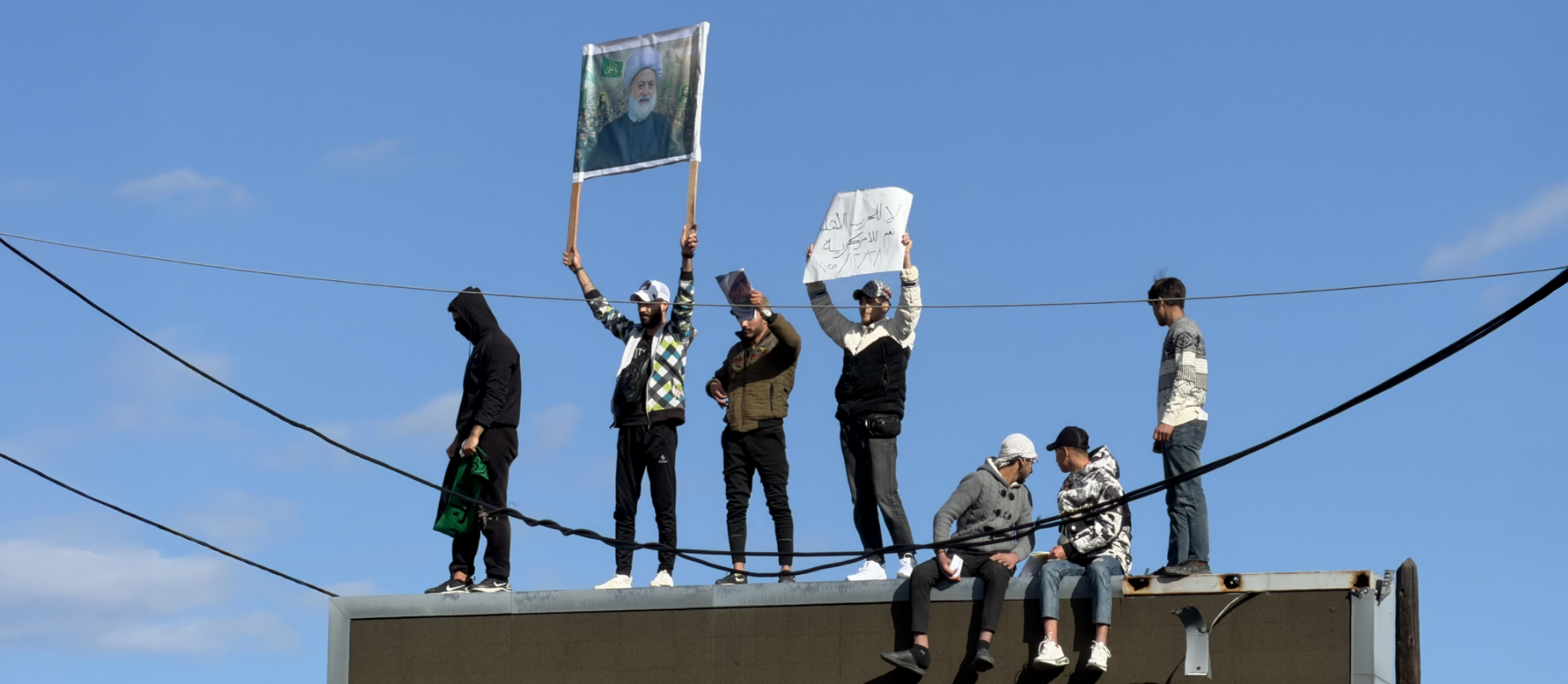
Alawite cleric Ghazal Ghazal has played a prominent role in mobilising protests along Syria’s coast, repeatedly calling on supporters to take to the streets. In recent weeks international media outlets such as the Associated Press and The New York Times have described him as the “spiritual leader” or “spiritual authority” of Syria’s Alawites — language that mirrors statements issued by the body he heads, the “Supreme Alawite Islamic Council in Syria and Abroad.” But how accurate is this characterisation? And what kind of following does Ghazal Ghazal actually command?
Making of a cleric
Prior to the fall of the Assad regime, Ghazal Wahb Ghazal was certainly among the more visible Alawite clerics in Syria, although he could never be described as a supreme spiritual authority. Born in the village of Tala in the Latakia countryside into a well-known Alawite religious family, he studied at the Faculty of Islamic Sharia in Damascus and later at the Global University for Islamic Sciences. His clerical trajectory reflected a broader tendency within parts of the Alawite religious milieu to align Alawite practice more closely with normative Islam. This included serving as “mufti of Latakia,” holding a seat on the Jurisprudential Scientific Council, delivering sermons in mosques and performing the Hajj pilgrimage to Mecca in 2023.
These credentials, however, never made him the overall religious leader of the Alawite community, one of Ghazal’s supporters — an Alawite from Latakia who once headed an Iranian-backed militia and fled Syria after the coastal massacres in March — explained to Syria in Transition: “He was an ordinary cleric. He did not operate in politics and did not involve himself in matters beyond strictly religious affairs, particularly in the Syrian coastal region.”
The Supreme Council that Ghazal heads was itself only established after the fall of the Assad regime. Even then, describing him as the spiritual head of the Alawite community would be misleading. The same source stressed that Ghazal cannot be compared, for example, to Ayatollah Ali al-Sistani’s position among Iraq’s Twelver Shia. “Alawites do not have binding religious authorities in their creed,” he explained. “They represent a philosophical path that is not governed by clerical hierarchies.” In other words, the Alawite faith does not recognise a supreme religious authority in the first instance.
Forged by fire
The turning point came with the coastal massacres. Reports of killings and abuses against Alawites have led many within the community to view his political demands as aligned credibly with their interests, particularly when contrasted with what they perceive as the transitional government’s attempts to “make the Alawite community obedient to its orders,” as Ghazal himself put it in a recent interview with the pro-resistance axis media outlet The Cradle.
Ghazal Ghazal has won particular support from the most hardline segments of the Alawite community and notably from several self-proclaimed Alawite insurgent groups. Often labelled by supporters of the transitional government as “regime remnants”, these claim to endorse Ghazal’s political aims, above all the demand for some form of an “Alawite region” within a federal system. Frequently they present themselves as acting in accordance with Ghazal’s guidance. When he calls for protests, they join the demonstrations; when he urges de-escalation to avoid further bloodshed, they claim to comply.
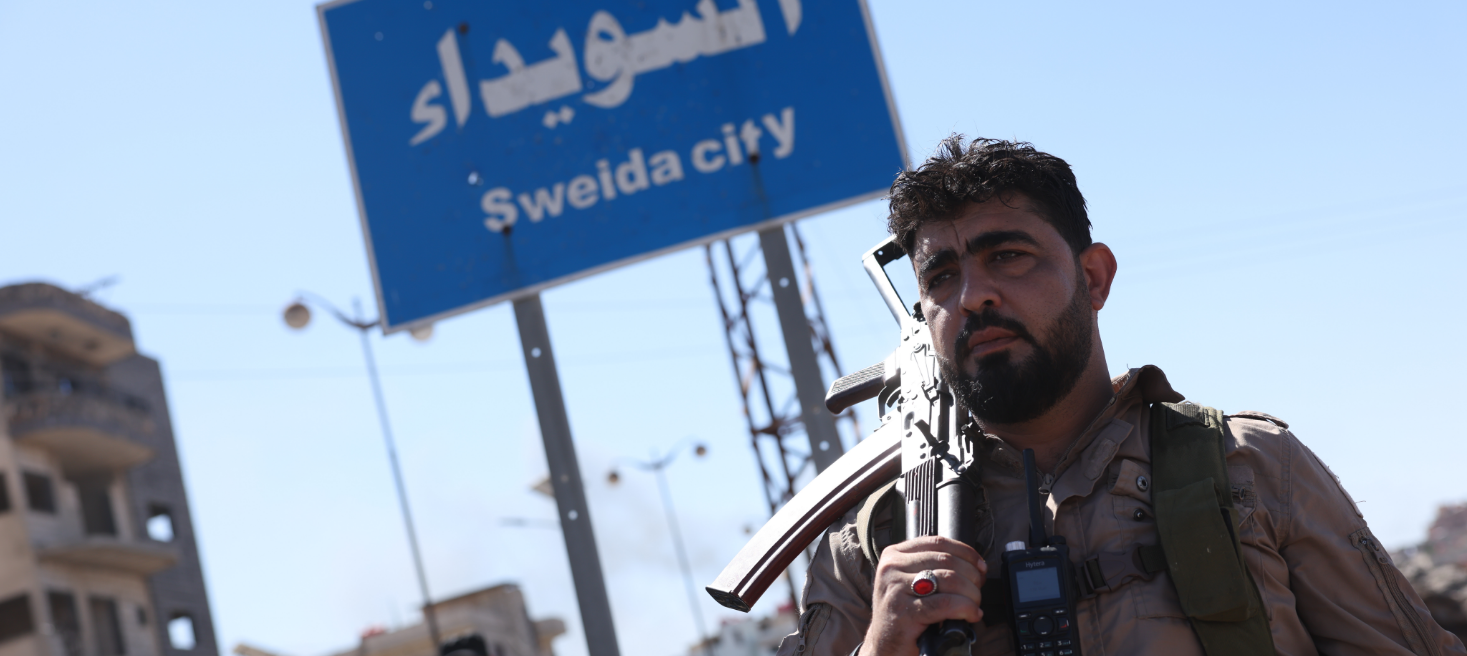
It is this dynamic that creates the impression of Ghazal as a kind of “spiritual authority.” Yet even here, the kinetics are primarily political rather than doctrinal, despite an apparent reflex to seek religious legitimacy in times of political chaos. Ghazal’s rise is thus broadly comparable to that of Hikmat al-Hijri among the Druze in Suwayda. A source claiming affiliation with Coastal Shield, one of the newly formed Alawite insurgent groups, told Syria in Transition: “Our aims and demands are the demands of our religious authority, Shaykh Ghazal Ghazal (may God protect him).” He added: “All of us, across all formations and forces, are under the banner of Shaykh Ghazal Ghazal, and we trust that he will take the wisest decisions and guarantee the safety of this noble sect.”
Not all support him
Alawites more inclined toward pragmatic engagement with the transitional government reject Ghazal both as a political representative and a supreme religious authority. Within Alawite communities, however, open criticism of Ghazal is often treated with suspicion and easily discredited. Among Alawites who were initially optimistic about the transition but have since moved closer to Ghazal’s sceptical stance, his critics inside Syria are widely assumed to be acting under government pressure.
A beekeeper from near Qardaha — who described himself as having been “reborn” with joy after Assad’s fall — claimed that Ghazal’s Alawite critics were acting “under threats.. because an Alawite does not sell out his Alawite brothers.” For him, the scale of the response to Ghazal’s calls for protests constituted proof that those critics “do not have influence over the people." He added that Ghazal’s calls for federalism were seen as “better than being killed.” If the transitional government wanted to win Alawite trust, he argued, it should issue a general amnesty for Alawites, while naming clearly those senior Assad-era officials subject to legal prosecution.
Not all Alawites who are sceptical of the transitional government, however, align with Ghazal Ghazal. One, who opposed the Assad regime and left Syria before its fall and described the current authorities as “extremist in ideology and of one colour” — a common phrase among critics across political lines — offered a markedly different assessment. Ghazal, he noted, belongs to his own clan, yet failed to play any meaningful role in defending Alawite interests prior to the coastal massacres. He contrasted this with Saleh Mansur, who emerged earlier as a vocal Alawite critic and won support among sceptics well before Ghazal’s rise. Mansur was later arrested by the transitional government and subsequently released, reportedly on the condition that he refrain from further political activity. Notably, however, Mansur has since called on Alawites to demonstrate in response to Ghazal's calls.
Backers and conspirators
The same critic of Ghazal claimed that the cleric was currently residing in areas controlled by the Syrian Democratic Forces (SDF). He further accused Ghazal of maintaining ties to Kamal al-Hasan, a former head of the regime’s military intelligence, and of operating under pressure from the SDF — effectively serving as a bargaining chip in ongoing negotiations between the SDF and the government. For such critics, Ghazal's calls for federalism are essentially an attempt to repeat the failed 1920-1936 'Alawite State' experience of the French Mandate.
Allegations of collaboration with Kamal al-Hasan, however, remain unconfirmed. Indeed, some Alawite supporters of Ghazal explicitly reject any attempt to associate him with figures such as al-Hasan or Rami Makhlouf — the latter of whom publicly criticised Ghazal’s calls for mobilisation in November 2025, and the following month accused him of working with Ayman Jaber (of the Desert Hawks militia fame) and the SDF. Ghazal’s sympathies with the SDF are not in doubt, but are best understood as stemming from a shared commitment to decentralisation and federalism as mechanisms for minority protection, rather than as evidence that he operates as a direct SDF proxy.
Another line of suspicion concerns external backing. Ghazal has been linked in some reports to international actors ranging from Iran and Russia to Israel, although no conclusive evidence has emerged. In his interview with The Cradle, Ghazal appeared to hint at foreign support for his federalist agenda, stating that “the international forces that support this project [of federalism] are the forces concerned with Syria’s affairs and support the people’s right to self-determination and self-administration.” He did not name specific countries, and sidestepped a direct question about alleged French assurances regarding the Alawite community’s future. Instead, he spoke more broadly, expressing hope that “all democratic states will stand by our grievances and support our legitimate demands.” While the nature of his external backing has not been established, it is reasonable to assume that some form of external support exists — a condition that applies to all Syria’s influential actors.
What Ghazal represents
In a context shaped by decades of sectarian rule under Assad and the civil war, the boundary between political and religious affiliation has become blurred. The more relevant question, therefore, is not whether Ghazal is the spiritual leader, but what he represents in political terms. Some government supporters portray him as a malicious actor bent on fomenting instability and endangering Alawites. Such depictions, however, are unlikely to diminish his appeal among followers who see him as articulating their fears, real or imagined.
To gain broader Alawite trust, the transitional government in Damascus must take concrete action. Urgently needed are stronger protection against sectarian violence, whether perpetrated by Islamic State or angry mobs; a dialing down of the sectarian rhetoric on all sides; and meaningful steps to integrate Alawites into the military and security services on a genuinely professional and national basis. Targeted support and investment in the tourist and agriculture sectors would help alleviate economic hardship. In short, the government should demonstrate that the call for an “Alawite region” under a federal arrangement is unnecessary to guarantee the community’s safety and prosperity.
Alawites, meanwhile, will also have to reckon with the role members of their sect played in sustaining Assad’s dictatorship and the war. Many – if not most – are in denial. At the same time, Alawites are currently acutely vulnerable to being blamed collectively for the regime’s crimes and at risk of reassuming their pre-Assad period role as a marginalised and oppressed segment of Syrian society. If the state fails to act, Ghazal’s political influence risks hardening into a form of de facto religious leadership that goes the way of al-Hijri.