Syria’s Lucifer effect
What makes people who know right from wrong do evil things?
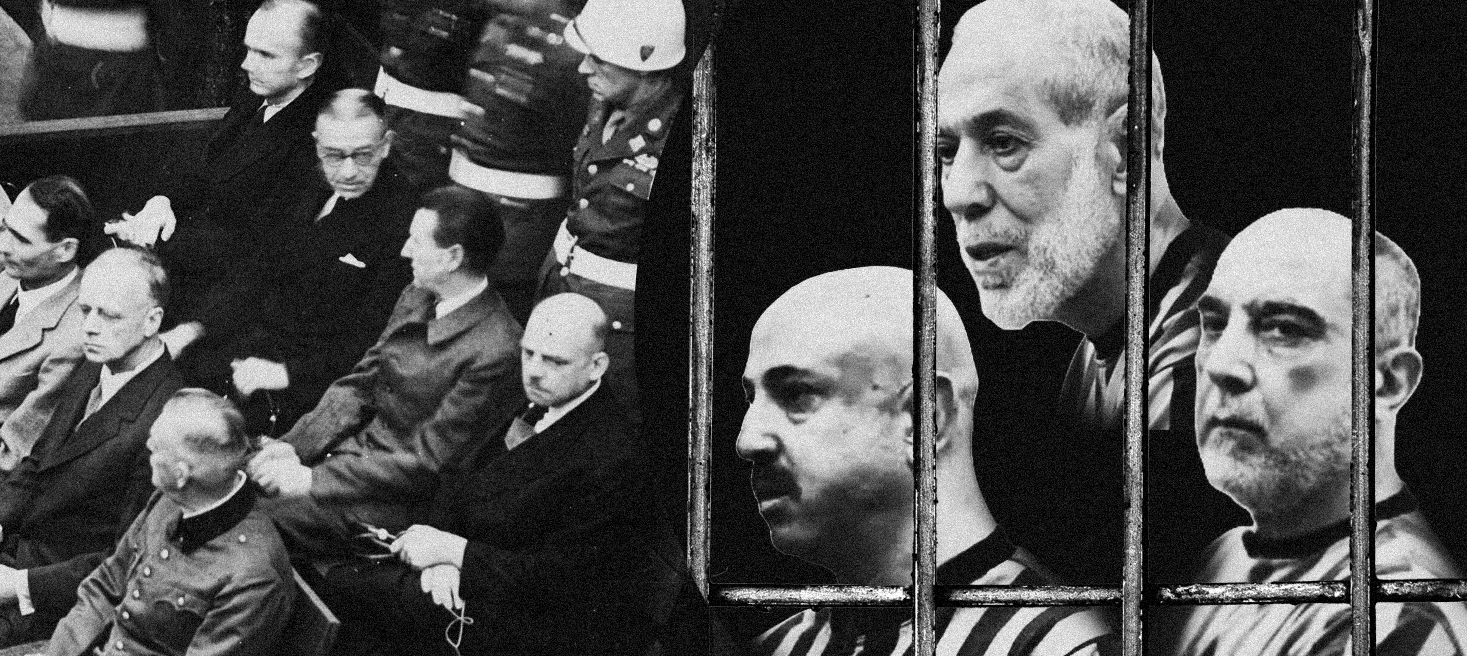
Syria’s transitional justice is missing something the Allies did with Hitler’s key henchmen after Germany’s defeat in World War II: psychiatrists and psychologists examined their minds to understand how a modern society could sustain a regime of mass extermination. What they found was unexpected and invites comparisons with once-powerful men now on trial in Syria.
With the first verdicts issued against high-ranking officials of the former regime, Syria’s evolving transitional justice is beginning to take a distinctly punitive form. Apart from procedural shortcomings, the proceedings have so far been marked by a highly retributive understanding of justice: perpetrators are to be identified, convicted and punished for specific offences. Driven largely by public demands for vengeance, Syria’s reckoning with the past has therefore focused on making heads roll. The criminal liability of individual heads of the Assadist hydra has overshadowed a broader question: to what extent was this 54-year nightmare sustained by a decades-long paranoid fixation on conspiracies and existential enemies, while the panoptic system ostensibly built to guard against them produced a social order in which advancement depended on preying on one another?
What appears self-evident from afar is difficult to recognise for those who grew up within the system. A shared Syrian narrative of the past is still a long way off. What one community remembers as oppression and loss may be remembered by another as protection, stability or even redemption. In any case, giving substance to Ahmed al-Sharaa’s promise of a Syrian “journey of recovery and revival” requires learning from the perpetrators and uncovering the motives, rationalities and justifications that kept the machinery of repression running at all levels of Syrian society. Forced disappearance to Sednaya, the expropriation of property and torture in public institutions such as hospitals implicated not only those who visibly carried a gun or wore a badge, but also judges, nurses, taxi drivers and countless others. The responsibility for suffering thus extends far beyond the individuals whose guilt can be established in court. The arrest of high-profile figures may create a sense of redress. For ordinary Syrians, however, the greater societal problem may be the informant who still lives next door.
To prevent guilt, shame and anger from becoming a suffocating legacy that haunts Syria for decades, Syria’s own “Lucifer effect” needs attention: what makes people who know right from wrong do evil things?
Demystify Monsters
The Allied-led war crimes trials in Nuremberg provided a blueprint for looking into the tyrannical mind. To support the criminal investigation, the US authorities appointed psychiatrists and psychologists to assess Hitler’s key accomplices. Of particular significance were the contributions of Douglas Kelley and Gustave Gilbert. Their work addressed one of the defining questions of the post-war period: was there something inherent in Germans themselves, some kind of “Nazi gene” that predisposed them towards authoritarianism and cruelty? Or had National Socialism produced a distinctive human type through socialisation – a “Nazi psyche” that could help explain how a modern society became capable of sustaining a machinery of extermination?
Most of the defendants showed no signs of psychosis. They were of sound mind and capable of distinguishing between right and wrong. Kelley and Gilbert arrived at different explanations, but both undermined the comforting assumption that Nazi perpetrators could simply be dismissed as clinically abnormal monsters. Their behaviour instead pointed to more familiar forces: ambition, submission to authority, the surrender of personal responsibility in the name of loyalty, the construction of existential enemies and the cultivated loss of empathy. Tyranny, even genocide, does not require an army of madmen. Under the right social conditions, otherwise psychologically normal people can carry it out.
Hermann Göring, Hitler’s second-in-command, exemplified the power-opportunistic breed of a Nazi careerist. Confronted with Nazi antisemitism and its notion of the racial inferiority of non-Aryans, he responded with the calculated cynicism of a political entrepreneur: “hardly anyone”, he insisted, truly believed that “nonsense”; as a political instrument, however, it represented “first-rate propaganda” that appealed to people’s basest instincts. The same cold-blooded pragmatism came to the fore when his personal relationships clashed with political ambition. Göring rationalised the purge of long-standing allies such as SA leader Ernst Röhm during the so-called Night of the Long Knives as political necessity since they had become obstacles to his power. Yet the psychiatric assessment also revealed another Göring: a charming, Paracodin-addicted attention-seeker who dominated those around him through wit and self-promotion, while displaying a hypersentimental and caring side in private correspondence with his family.
Julius Streicher, one of the Nazis’ most notorious antisemitic propagandists, represents a more doctrinal path to perpetration. Far more deeply imbued with conspiratorial antisemitism, his obsessive belief in a Jewish diabolism illustrates how objectively absurd worldviews can acquire subjective plausibility. The Thomas theorem captures the underlying logic: if people define situations as real, they become real in their consequences. Once an existential threat is perceived as real, violence against it begins to appear rational, necessary or even virtuous.
This banality became even more apparent in subsequent trials, where mid- and low-level figures had to account for their involvement. The questioning of doctors, lawyers, industrialists and administrative officials showed how an everyday life shaped by conspiracy, notions of identitarian exceptionalism and the constant invocation of existential threats gradually normalised violence. SS doctors involved in selecting Jews at Auschwitz for the gas chambers, for example, developed a perpetrator identity adapted to an extreme social environment that their own actions, in turn, sustained. They distanced themselves from their own complicity through moral codes that justified killing as a means of healing the nation.
From Doctors to Butchers
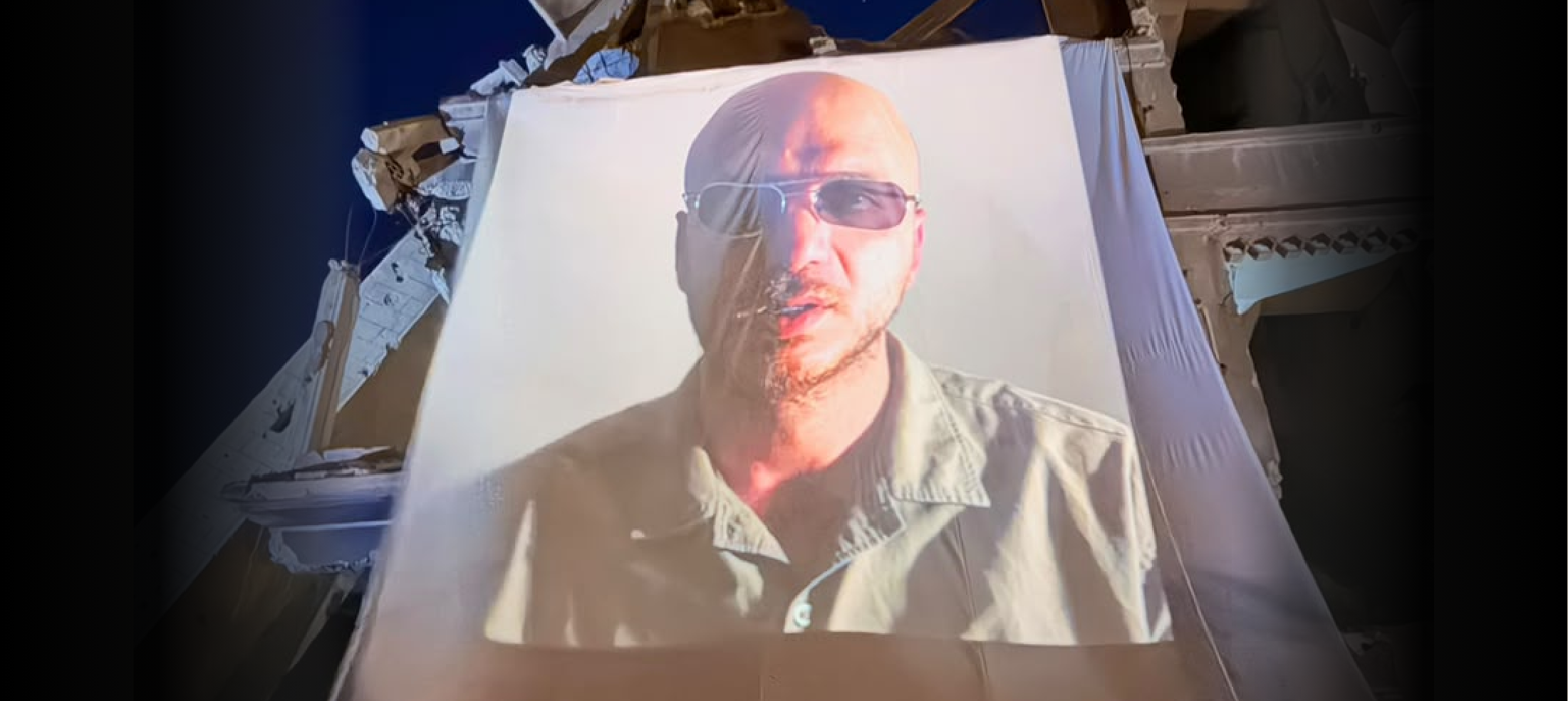
The normalisation of killing provides a useful point of comparison with Syria. Many doctors and medical staff became part of the regime’s architecture of violence, from participating in the torture of prisoners to bureaucratic complicity in the extermination of detainees. A video published by the Syrian Ministry of Justice in the summer of 2026 revealed new depths of depravity. The footage featured various military doctors from the notorious Tishreen Hospital who are accused of removing the liver of a conscious detainee from Military Intelligence Branch 215 and transplanting it into an ailing regime general. Media coverage focused primarily on reconstructing the medical procedure carried out in the hospital and dramatising the monstrosity of the individuals involved. What was left out was the pressing question: in what moral universe, and by what rationale, did such conduct – which turned detainees into readily available biological material for trained physicians – become intelligible in the first place?
Anyone familiar with Bashar al-Assad’s speeches after 2011 will recognise the worldview in which such acts could come to make sense. Assad described political opponents as “germs” or “vermin” within the social organism. Their removal could accordingly be understood as a surgical intervention to excise diseased tissue. This dehumanising language offers a clue to the rationality that a forensic analysis of the perpetrators would need to reconstruct as part of the ‘Assad self’.
The “Assad self” describes no single perpetrator personality. Instead, it is a recurring way of understanding oneself and behaving within a social order in which hierarchy, insecurity and proximity to power turned egoism and rivalry into rational strategies for getting by. This does not dissolve individual guilt into social structure. It does, however, raise the question of how freely people make choices within a system that systematically alters the costs and benefits attached to them. Assadism recoded Baathism’s totalitarian claim into an antagonistic social grammar that tied protection and advancement to one’s position within the regime, while the permanent fixation on existential enemies fostered a paranoid perception of politics as existential conflict. Within this order, superiority – and with it the normalisation of violence – was reproduced throughout society as people learned to secure their own position by distinguishing themselves from those deemed inferior, disloyal or threatening.
A Triptych of Complicity
Psychological assessments of defendants could give these abstractions concrete form and reveal different facets of the tyrannical self. Atif Najib may represent its security-driven variant, sustained by the regime’s persistent narration of a transgenerational conspiracy against Syria. It may reveal that in this world view, belonging to the regime’s muscles offered protection against the threats invoked on a daily basis, while also reducing the risk of becoming a target of the regime’s repressive machinery himself. It may reveal that he made a virtue out of perceived necessity. Identifying oneself as an ‘ibn al-muassasa’, a son of the institution, could fulfil a professional duty while expanding one’s personal micro-sovereignty, at times to almost god-like status. That power could then be used to vent the personal loss and humiliation produced by the very Assad system that had bestowed it in the first place.
Waseem al-Assad may embody the egocentric variant of this self, rooted in the patrimonial order of dynastic rule. Within that order, proximity to the nucleus was a basic resource in the everyday struggle for survival of the fittest, combining submission to those above with domination of those below. His public boasting about his connections and the impunity for killing and drug dealing afforded by his proximity to the regime offer a glimpse into a form of personalised sovereignty – the ability to carve out a sphere in which ordinary rules no longer applied and unequal treatment became an expression of social position.
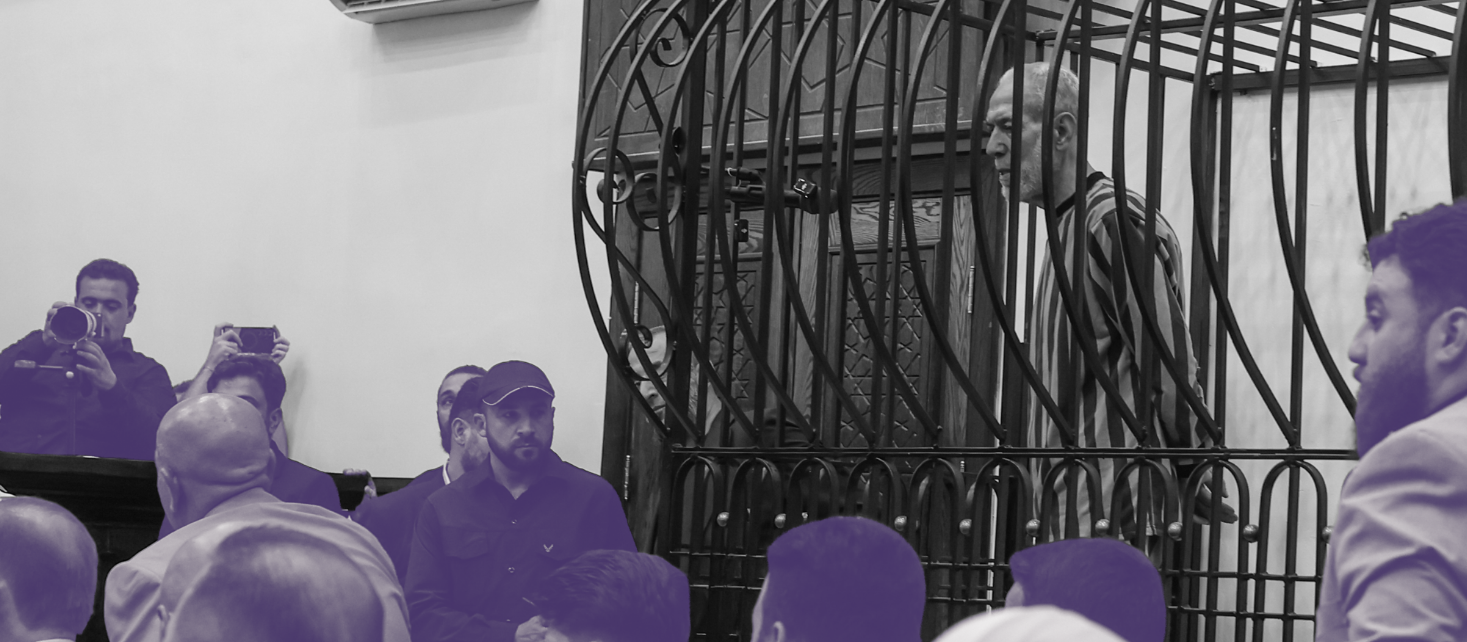
Finally, former Grand Mufti Ahmad Hassoun’s court statement may illustrate the self-reassuring variant of the ‘Assad self’, through which much broader sections of Syrian society could accommodate themselves to the regime. His testimony shows how proximity to unjust power was justified as an unavoidable necessity for preserving at least some capacity for moral action. Hassoun justified his alignment with the regime by arguing that it enabled him to help people in their daily lives or secure the release of detainees. Loyalty here becomes a bargain with the devil: complicity is accepted as the price of remaining able to do some good, while that limited agency in turn serves to temper responsibility through the claim that staying close to power also enabled others to be spared worse fates.
Turning the mirror inwards
Confronting these perversions is no end in itself. It could become a resource for a more enlightened next generation willing to look into the social abysses the Assad system produced in order to sustain itself. The patterns visible in the justifications and decisions of regime elites also reveal the rules by which the wider system operated. Those seeking personal advancement, aspiring to embody the ideal of the patriotic citizen, or simply trying to get by, learned to navigate according to the same underlying logic.
One did not have to belong to the upper echelons of power to internalise these rules. They provided a general frame of reference for functioning within a culture of brutalisation. The regime was therefore never entirely external to the society or limited to those with guns in their hands, nor could its legacy simply disappear with the institutions that sustained it. It can also be found in ordinary biographies, habits of judgement and forms of self-justification shaped under conditions in which self-interest was rewarded and everyday baseness was a rational mode of conduct. The persistence of these rationalities makes this kind of societal shadow work particularly relevant to Syria’s future. Learning from the ways of thinking of regime elites helps understanding how hierarchy, power, loyalty and personal gain came to govern everyday social life.
Systematically assessing the psychology of perpetrators accused in court could help structure the transitional justice process itself. Syria will have to decide who should be prosecuted, who may qualify for amnesty, and how such decisions can be explained to a society in which the machinery of repression reached far beyond those who gave the orders. Who, then, were the real wolves? Where is the line between wolves and those who merely learnt to howl with them? And at what point does a howler become a wolf?
Even if present conditions do not allow such insights to inform prosecutions and sentencing, systematically recording them would create an archive for future generations – a record not only of what perpetrators did, but of how they understood and justified what they did. Understanding why people crossed the line could help future Syrians make sense of responsibility and build institutions that make it less tempting for a new generation to howl with the wolves.