The logic behind the madness
Why Trump’s Middle East strategy is not new – and may even be working
The US/Israel war on Iran is described by some as impulsive, chaotic, and even irrational: a war that the US has already lost. This view might generate clicks, but it overlooks the deeper logic shaping American policy in the Middle East over the past decade and a half. The war in the Gulf is not a rupture from a previous, more enlightened US strategy, but its continuation by harsher means.
In 2011, then US Secretary of State Hillary Clinton declared in Foreign Policy that “the future of politics will be decided in Asia, not Afghanistan or Iraq.” The statement made explicit what would later become “the pivot”: a long-term American effort to reduce overcommitment in the Middle East and redirect attention towards China. Under Donald Trump, the pivot was institutionalised in the 2017 US National Security Strategy. Under Joe Biden, it continued under the softer language of “invest, align, compete.”
Regardless of the marketing term, the underlying premise remained constant: reducing the costs of American engagement in the Middle East while maintaining a self-sustaining regional order centred on US-aligned nation states.
The Biden interlude
For Washington, any meaningful drawdown required resolving — or at least containing — two longstanding problems. The first was Israel’s position in the region and the perpetual instability generated by the unresolved Palestinian question. The second was Iran’s nuclear ambitions, and its ability to project influence across the region through the Axis of Resistance encompassing Hezbollah, Hamas, Iraqi militias, the Houthis and Assad’s Syria.
Trump’s contribution to the Asia pivot was to accelerate it. Whereas Obama believed diplomacy could moderate Iran and preserve the possibility of a two-state solution, Trump concluded the opposite. His first term was about “maximum pressure” on Iran, withdrawal from the JCPOA and the killing of IRGC general Qassem Soleimani. Trump also greenlit Turkey’s incursion into Syria in 2019 and its campaign of assassination against Kurdish commanders who were (nominally) US allies. He embraced the Saudi Crown Prince while simultaneously championing the Abraham Accords that sought to normalise Israel’s place within the region while effectively bypassing (and perhaps killing off) the Palestinian issue.
The Biden years paused this Middle East re-engineering. Washington withdrew from Afghanistan, reopened diplomatic channels with Tehran and adopted a more restrained tone. Yet regional actors drew the same conclusion regardless: America wants out.
The rise of the regional triad
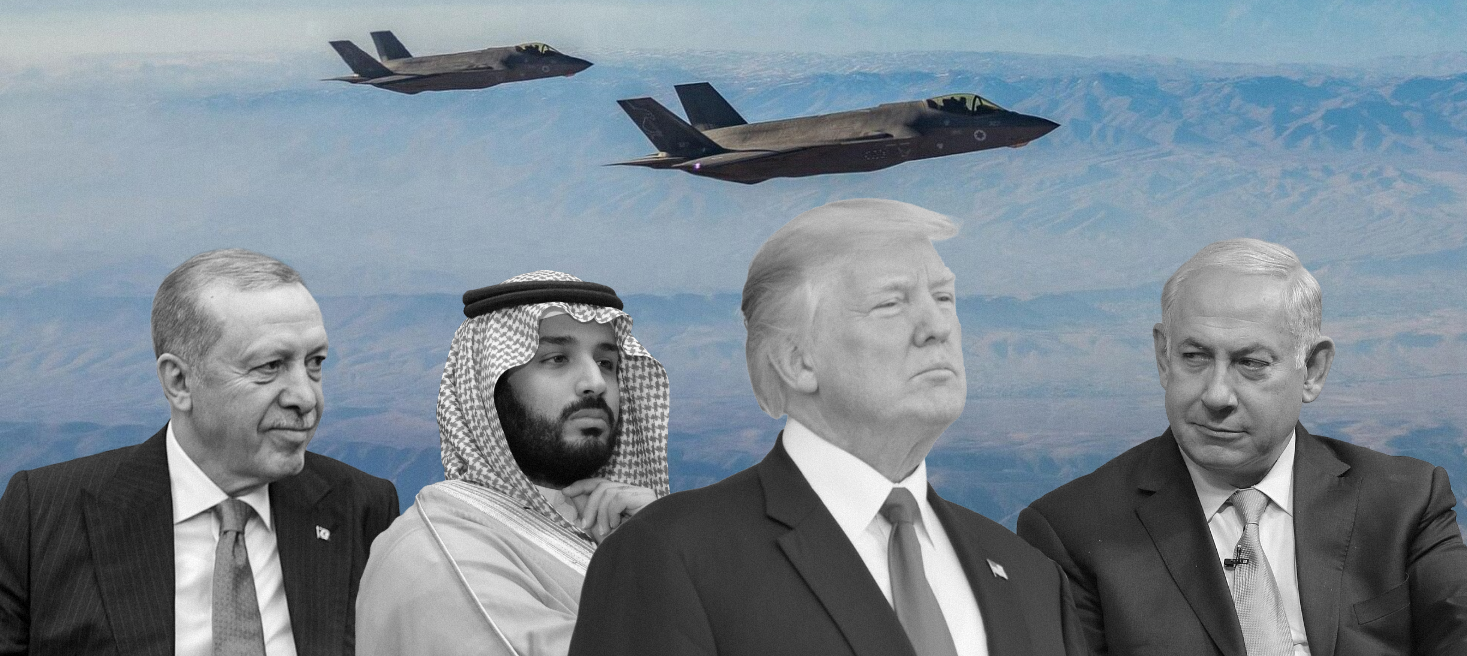
In his second term, Trump effectively placed an early bet on three regional strongmen capable of imposing order themselves on behalf of the US: Israeli Prime Minister Benjamin Netanyahu, Saudi Crown Prince Mohammed bin Salman and Turkish President Recep Tayyip Erdogan.
If Trump’s bet succeeds — and arguably it already has in part — the result will be a self-managed Middle East overseen by three dominant powers: Saudi Arabia, Turkey and Israel. It’s a Thucydidean vision with little room for high-minded ideals on democracy and human rights.
As a consequence, Israel has become markedly more assertive militarily, operating across multiple theatres with growing confidence. Turkey has re-emerged as a central diplomatic and security actor, particularly after the collapse of Assad’s Syria and Ankara’s successful consolidation of influence there. Saudi Arabia has positioned itself as the region’s principal Arab hegemon — sponsoring Syria’s reintegration into the Arab fold, shaping debates around Gaza, Lebanon and Iran, and increasingly acting as the Gulf’s pushy ‘older brother.’
This logic explains much of Washington’s recent behaviour. It explains the open-door policy toward Syria’s new leadership despite unease about its jihadist past. It explains declining American interest in protecting Kurdish partners in Syria and Iraq, and Washington’s indifference toward Israeli operations in southern Lebanon, southern Syria and the West Bank.
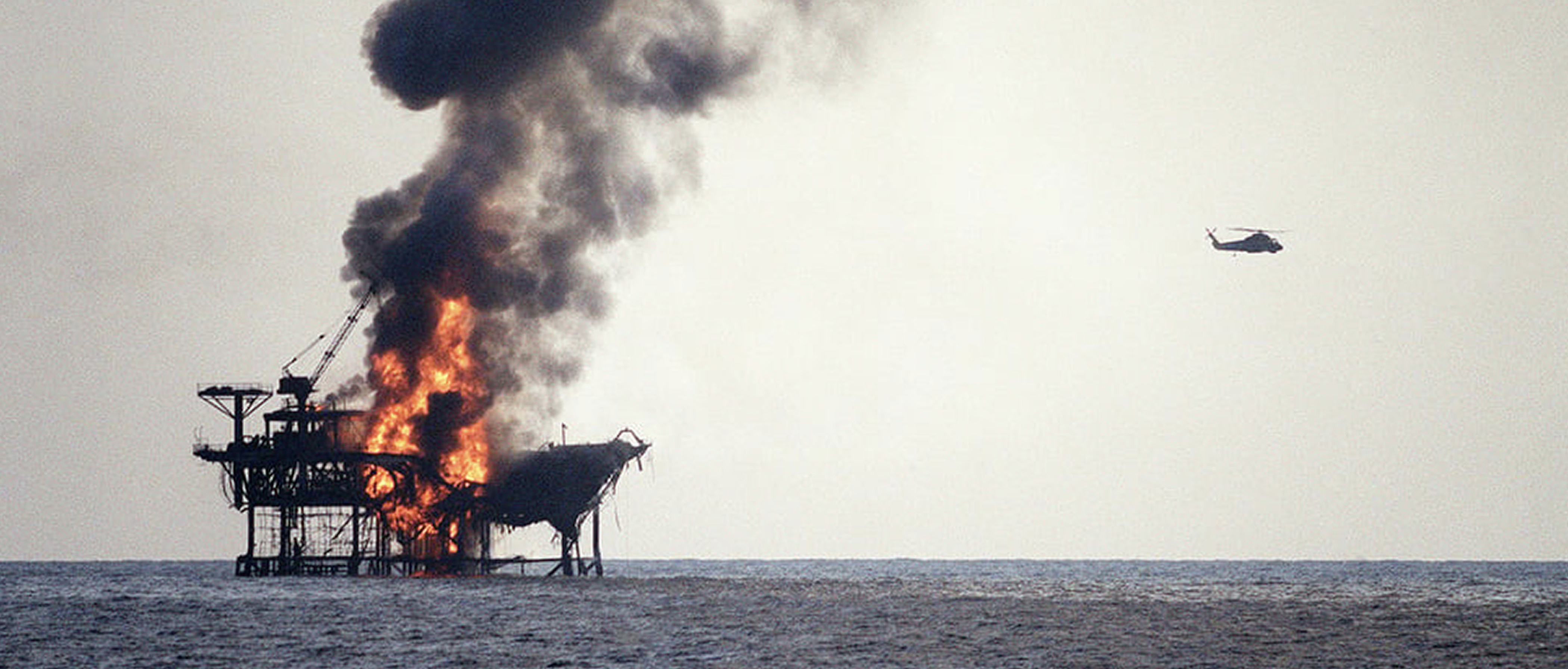
It may also explain why Trump is willing to talk to — and perhaps even salvage — Iran. Turkey and Saudi Arabia have their own rivalries with Tehran, and neither wants it armed with nuclear weapons. But both have also made clear to Washington that a fractured Iran is not in their interest. For the region to remain stable and for the Strait of Hormuz to remain open, Iran must be contained, not destroyed. Paradoxically, Trump may be using the Iranian threat as a stick to cajole Saudi Arabia into joining the Abraham Accords, thereby normalising Israel’s position in the region and drawing the three pillars of the triad closer together and containing Iran in the long-term.
Connectivity and trade
The logic of the regional triad also underpins the region’s ambitious infrastructure and connectivity projects. The Israeli-backed India–Middle East–Europe Economic Corridor, Turkey’s Iraq Development Road and Saudi Arabia’s many railway, energy pipeline and fiber optic projects are geopolitical instruments intended to anchor spheres of influence through trade, logistics and infrastructure.
In many respects, these projects are glossy strategic brochures produced by the regional triad, each of its members seeking to convince Washington of its routes, its ports, its railways and its political geography. Each project offers America the same promise: regional integration and stability without excessive American burden, and of course “economic prosperity.”
But glossy brochures are just that. Trade corridors still have to contend with terrorism, weak states and unresolved conflicts. The three powers expected to manage the new Middle East are not natural partners either. Israel, Turkey and Saudi Arabia may all share an interest in limiting Iran, but they also compete for influence in Syria, Iraq, Lebanon, the eastern Mediterranean and the Red Sea. Their connectivity projects are, in part, rival bids for primacy that might create their own cycle of instability.
Threats and opportunities
When US envoy Tom Barrack remarked at the recent Antalya Diplomatic Forum that the region “respects one thing – power,” he was simply describing in plain terms the organising principle of the new order.
What this means for small states is that they will need to decide who to align with, and how. Faced with a “near enemy” like Saudi Arabia, the UAE has thrown in its lot with Israel. Syria faces being under Ankara and Riyadh’s thumb, so it too has turned to Israel via the UAE. Other smaller states such as Jordan, Kuwait and Qatar may also have to choose one or more sides, or else like Syria, hope to be friends with all three.
Despite its weakness, the emerging regional order offers opportunities for Syria. What makes it a perfect battlefield also makes it a strategic gateway should the regional triad come to an agreement: northwards to Turkey, southwards to Saudi Arabia, westwards to the Mediterranean, and potentially even into future Arab-Israeli trade routes. Connectivity, if handled carefully, could give Damascus leverage and cement the new leadership’s claim to be restoring Syria as the focus of a confluence of regional and global interests.
The emergence of a post-Assad Syria is, in many ways, a by-product of America’s longstanding desire to exit the Middle East – a process that Trump has accelerated by pushing responsibility onto regional strongmen and encouraging transactional politics.
Against this background, it was no surprise that President Ahmad al-Sharaa was invited to France to attend this year’s G7 meeting; or that a Syrian official speaking to Reuters said his country’s participation in the talks would likely focus on its role as a “potential strategic hub for supply chains” following the closure of the Strait of Hormuz.