Whose civil society?
Grassroots civil society groups are re-emerging, but the struggle over who controls them has only begun
Syria’s civil society is stirring back to life as grassroots groups return to long-abandoned spaces. Hundreds of NGOs have poured into Damascus since the regime’s collapse, blending returning exiles, local organisers, and a state redefining its role. From mental-health circles in Daraya to well-repair teams in rural Damascus, civic actors are driving recovery faster than official institutions. But questions loom large: who sets the rules, who oversees whom, and can Syria build a genuinely independent civic sphere without repeating the errors of the past?
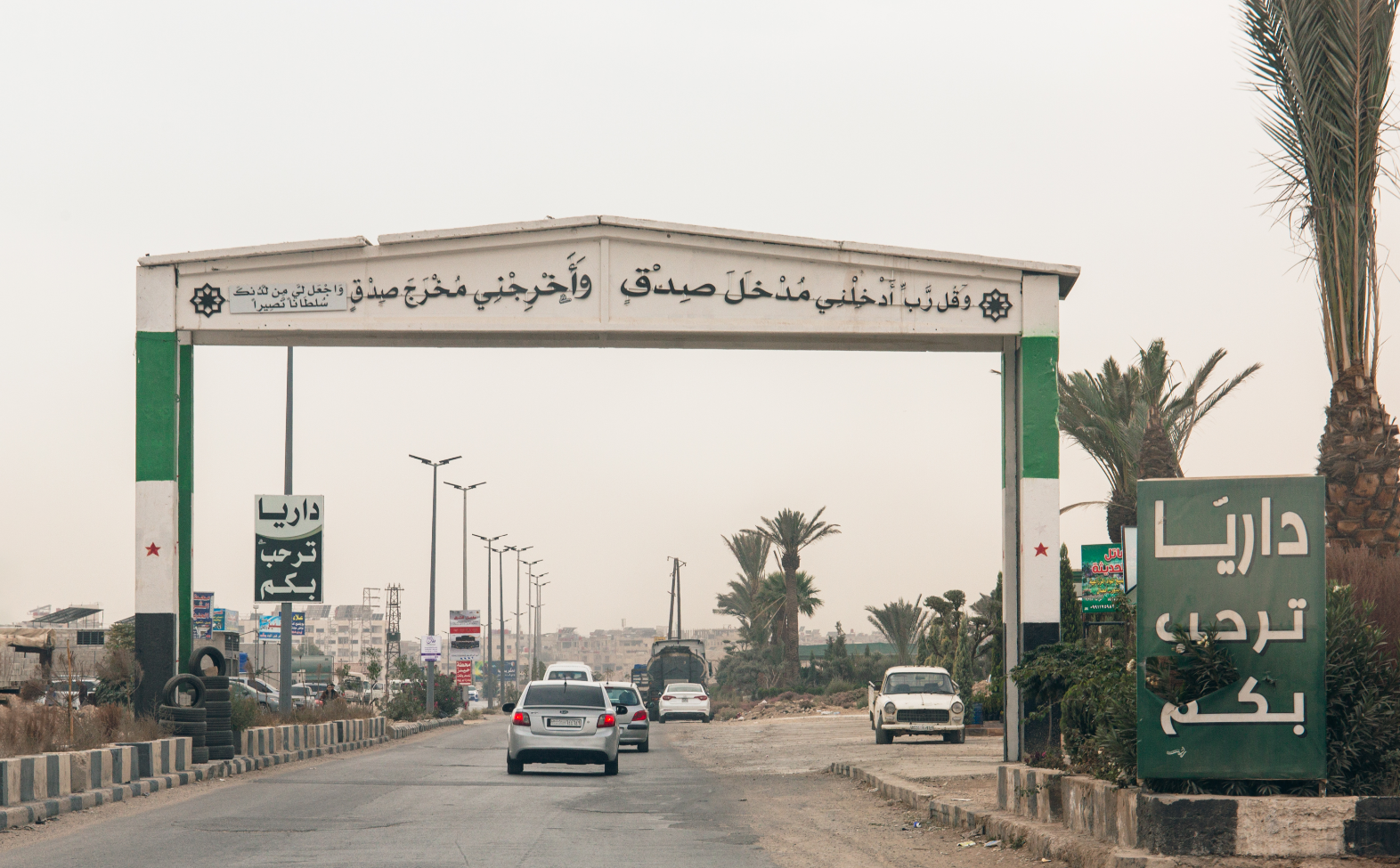
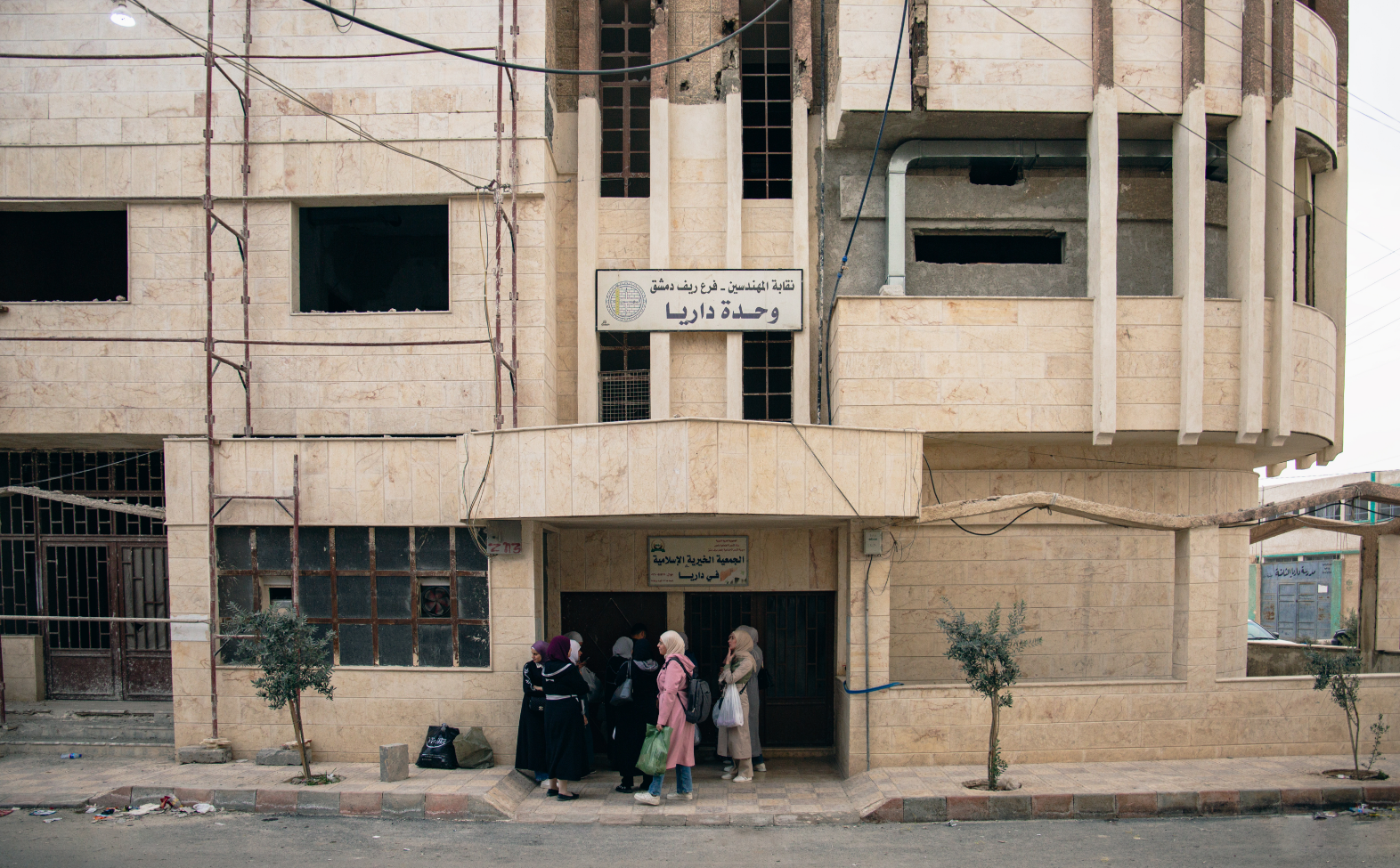
In a small room in Daraya, a city southwest of Damascus, a group of Syrian women are asked to share something funny they’ve experienced recently. After stifling nervous laughter and glancing at one another, the room falls silent. The question came from facilitators opening their weekly mental-health session.
“We’ve forgotten how to laugh, how to find joy in daily life,” says Rahaf al-Bayad, a mental-health facilitator with the International Network for Aid, Relief, and Assistance (Inara). She speaks as both a practitioner and a newly returned resident of a city that witnessed one of the Syrian war’s earliest massacres in 2012, and was later emptied of much of its residents by years of relentless shelling.
Under Assad, speaking openly about mental health was taboo, not only socially but politically. “People hid their problems. You couldn’t mention a kidnapping, a missing relative, or even electricity and water shortages,” Rahaf explains. “Such admissions risked regime retribution. But it’s different now,” she says with a sense of pride and relief. “Women come to us now and pour their heart out. They come to us now and ask for more sessions.”
© syriaintransition.com
The homecoming
Inara, an American-registered non-profit providing medical support to children in war zones since 2015, is typical of many of the NGOs that are now setting up shop in the Damascus region. It had long worked in northern Syria, but this is its first time operating further south, where the regime had remained entrenched throughout the war years. It is one of hundreds of NGOs that have poured into Syria since Assad’s fall in December 2024. In the first six months of 2025 alone, more than 650 NGOs registered with the Ministry of Social Affairs and Labour in Damascus. Today over 2,400 operate across all provinces.
The NGOs programme officer Mohammed al-Emam returned from exile to establish a centre in his native Daraya just two weeks after the regime fell. More than 1,000 women and children have already passed through the small room they rent from a partner charity.
© syriaintransition.com
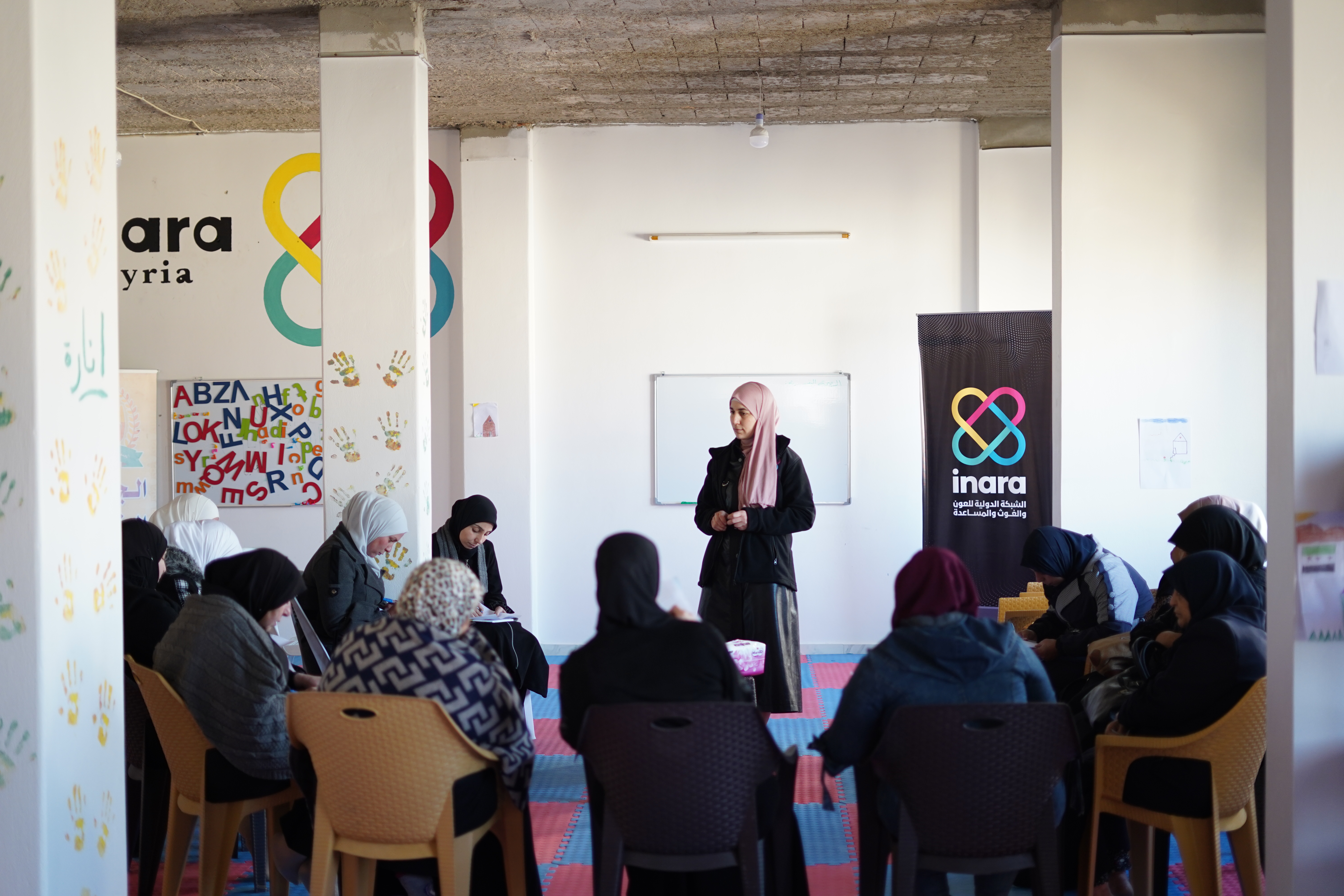
“They love being here. One woman arrived two hours early just to sit in the space. That’s part of the healing too,” Al-Emam told Syria in Transition. Inara’s programme is locally run by Syrians who are themselves working through recent trauma. Unlike many internationals, they will remain.
The return of people and organisations committed to rebuilding Syria is welcome and necessary, though not without some risk. Many humanitarian actors have spent over a decade at Syria’s borders waiting for the moment to help shape a “free Syria.” Some of the sector’s biggest names – Raed Saleh of the White Helmets and Hind Kawabet of Tastakil, a feminist organisation – have joined the new government. Others are still figuring out how to shift from an oppositionist mindset, including towards the new HTS-led government, into a collaborative, state-building one.
Syria may be edging toward a full repeal of the Caesar Act sanctions, but for now investors are holding back, clutching their MOUs. National and international humanitarian groups continue to plug the country’s gaping needs. Foreign aid remains precarious, and the legacy of weaponised aid and co-opted NGOs threatens a return to old patterns.
© syriaintransition.com
Show Syrians the money
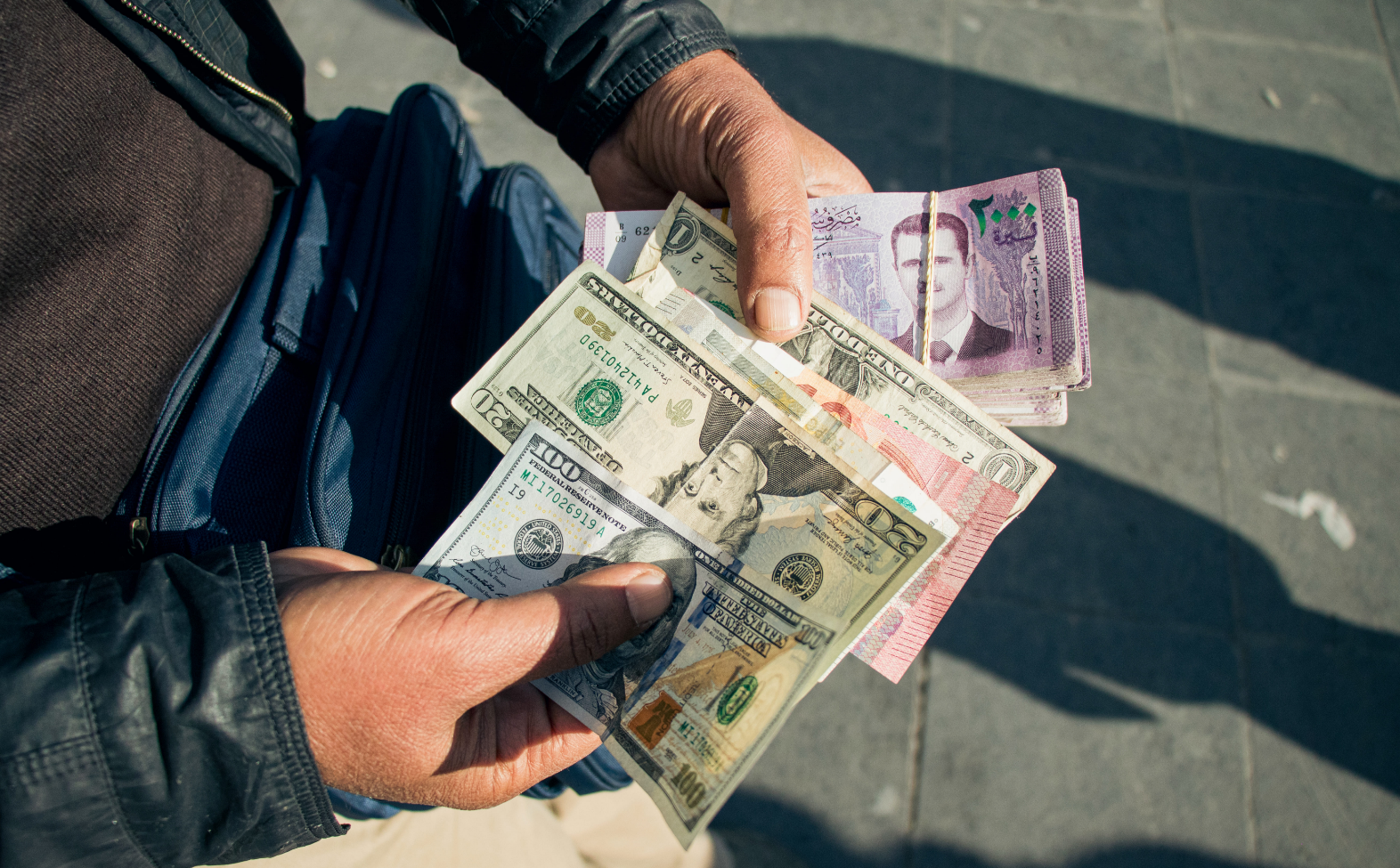
Conservative estimates put the cost of reconstruction at $216 billion. Despite the influx to Damascus of INGO staff in their armoured SUVs, a global donor crisis and potential new conflict threaten to undercut humanitarian efforts. Trump’s rollback of foreign aid in January has already hit operations, especially in eastern provinces like Hasakeh, Raqqa, and Deir Ezzor.
International donors pledged $6.5 billion for Syria in March, but this is way short of needs. Donations to the new public Syria Development Fund, launched in September by President Ahmed al-Sharaa, have passed $85 million, with the names of “Top Supporters” displayed online. Capitalising on ego and goodwill could be an empowering model to pursue in the short run, but banking restrictions remain a hindrance and more donors are needed.
Gulf states are filling crucial gaps by covering government salaries, settling Syria’s World Bank arrears, and pledging more than $10 billion for reconstruction projects, but many of these await take-off. The transitional government’s U-turn on engaging with the IMF and World Bank will help build an investment-friendly climate but, like sanctions relief, it remains a work in progress. For now, as in the past fourteen years, civil society is Syria’s life support system.
© syriaintransition.com
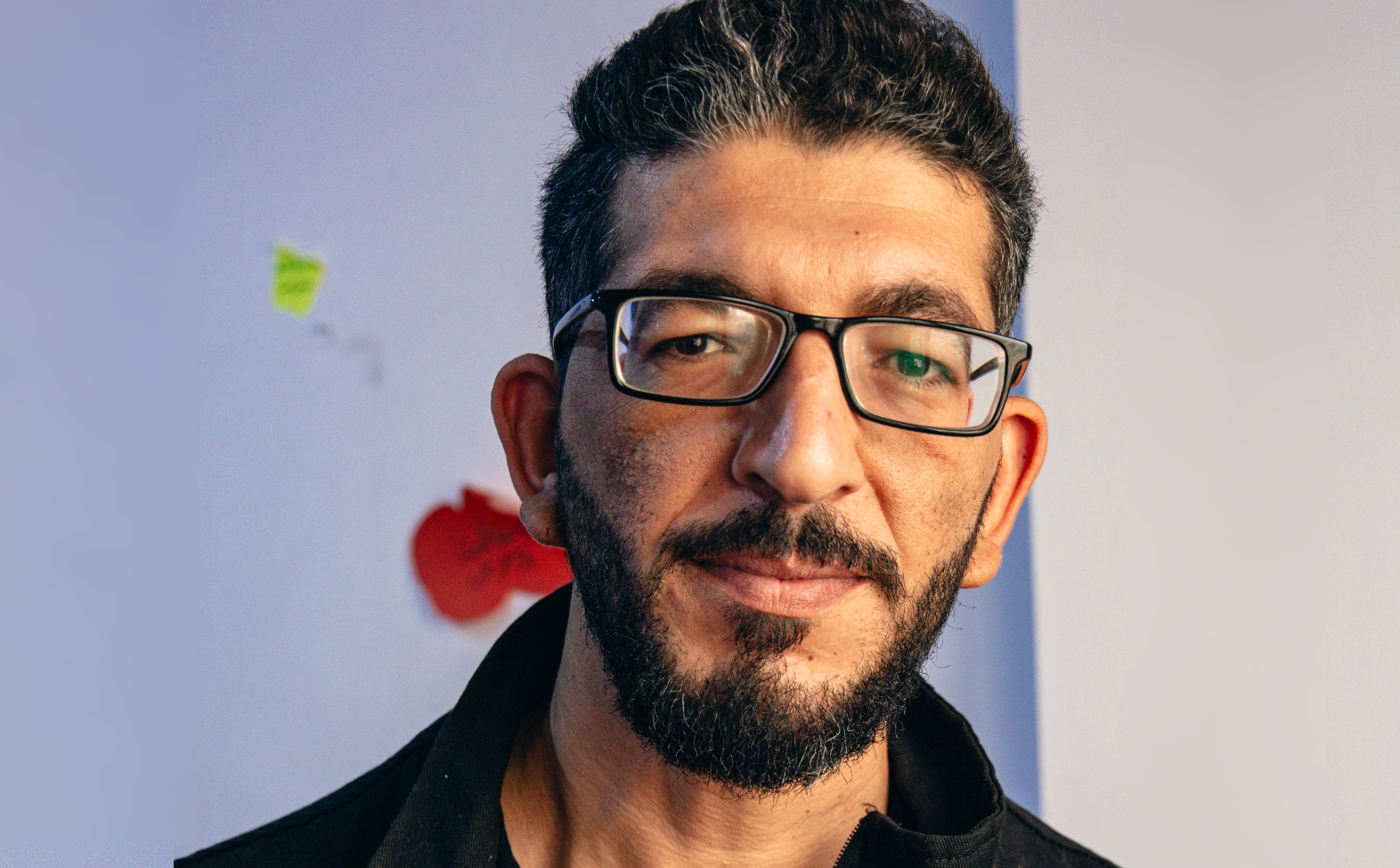
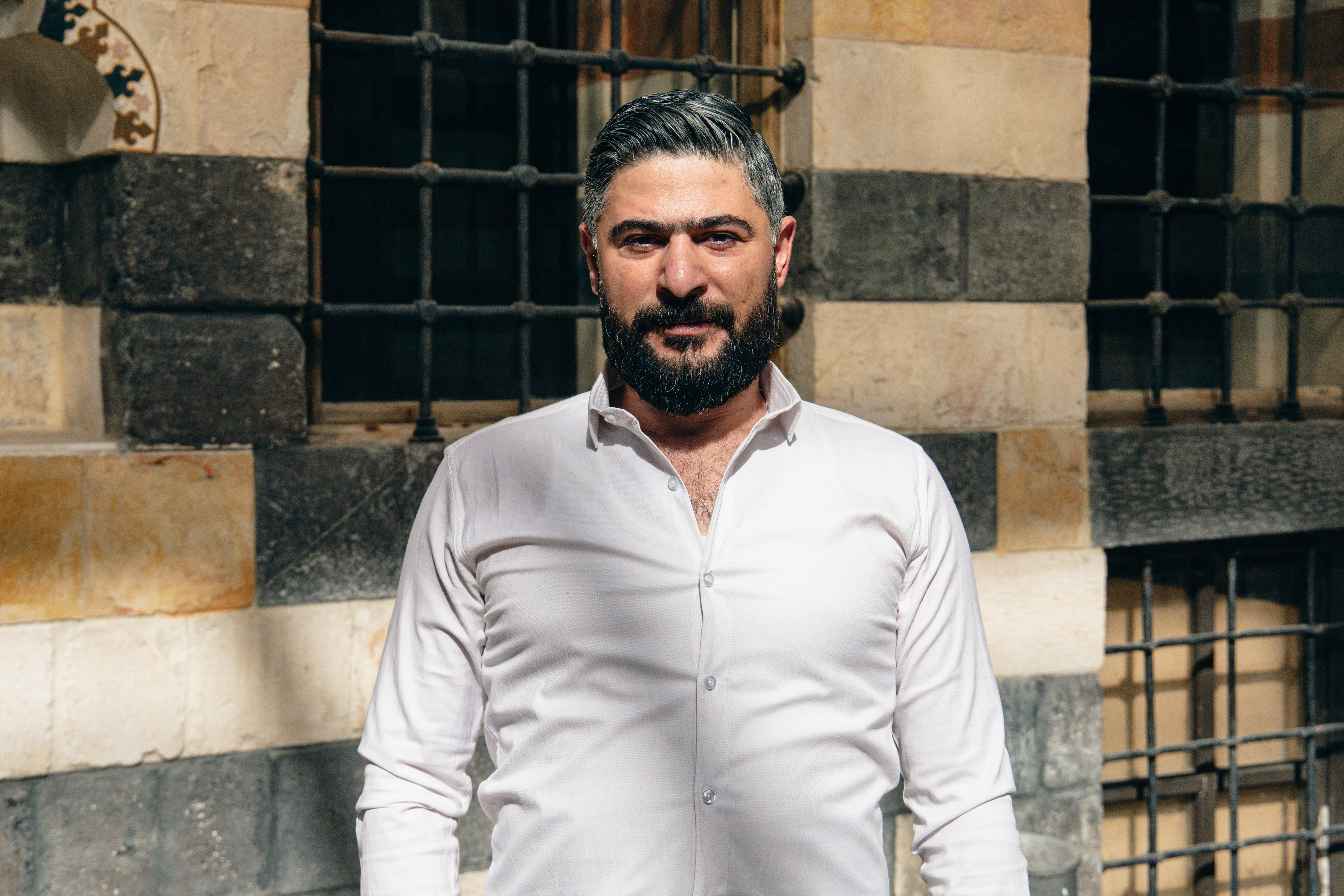
Speaking to Syria in Transition in downtown Damascus, Kinan al-Koudsi, a specialist in financial oversight and compliance in the humanitarian sector, stresses that independence and transparency are key to making the NGO sector an active participant in reconstruction.
Al-Koudsi once worked with the Syrian Arab Red Crescent (SARC), before the organisation’s complicity in the regime’s weaponisation of aid destroyed its credibility. After a prison stint in 2012, he left Syria and worked with organisations in France, Germany, and Turkey. Determined to contribute from the inside, he returned and joined a small group repairing wells in rural Damascus.
It takes about five people, four days and $1,500–20,000 to fix a single well, he explains. Using funds mostly from the Syrian diaspora, they repaired 18 wells in four months. The group had to navigate ministries like Water and Social Affairs and Labour for permissions and to avoid duplication, but he said that bureaucracy wasn’t a major hindrance.
Local initiatives like these have sprung up nationwide. From community generators lighting Aleppo’s neighbourhoods to repaved streets in Al-Tal and refurbished buildings in Daraya, civic organising is often the fastest, most effective route to recovery, and to maintaining calm. Often, they are well ahead of the government.
© syriaintransition.com
A civil, not controlled, society
Coordination with the transitional government and aid INGOs is essential for scaling civic efforts. Control is not. Many in the sector were angered when the government announced in October that the archaic Law 93 of 1958, often used to undermine civil society organisations (CSOs) under Assad, would remain in force. It imposes restrictions and requires prior approvals for pretty much everything, including access to foreign funding. Several Syrian NGOs publicly argued that it stifles independence and operational capacity.
“Most of Syria’s laws are over 70 years old and clearly unfit for today,” says Bakri Zeineddin, programme manager at Madaniya, a civil society umbrella group. Some argue Law 93 is a temporary placeholder pending a replacement.
“Any concessions later will let the government say: ‘Look, we expanded your space,’” Zeineddin notes, “But they could also tighten it.” Madaniya has raised its concerns directly with the government.
© syriaintransition.com
Those who have spent more than a decade abroad filing paperwork for fastidious donors say that internationally recognised mechanisms like tax declarations and financial reports should replace archaic controls. The worry is that excessive checks will hamper civic efforts and risk repeating Assad-era manipulation by a predatory bureaucracy. Under the old system, NGOs coordinated with state-affiliated bodies like SARC and the Asma Assad-run Syria Trust for Development (STD), enabling political manipulation of aid, as the UN’s record in regime-held areas made painfully clear. NGOs operating in opposition-held areas were not immune to similar criticisms, but years of external oversight and corrective measures have professionalised many organisations and cleared out others — though the sector still has a long way to go.
“Not every group who wants to get together to clean some streets needs to become a licensed CSO/NGO,” says Al Koudsi. Without clear and fair oversight however, there’s a risk of corrupt backroom deals and political manipulation. The hot debate among stakeholders is over who will oversee and what the mechanisms will be.
Out with the old?
Relying on old governance structures, laws and staff, however much disliked, has been a pragmatic necessity for the transitional government. Capacity is limited across Syria, especially in former regime areas. The civic aid sector is no exception. High-profile figures complicit in humanitarian war crimes like SARC’s Khalid Hobeibati are gone, but many collaborators in middle management remain.
“It’s difficult to meet people who were close to the former regime, but we have to let it go for now and squeeze them out gradually,” says a development professional during a visit to Damascus.
Human resources are scarce, though returnees and changes among INGO staff are helping. Former exiles bring enhanced experience, which is a key source of leverage, she says. “We have the upper hand now. After being forced out, we gained technical expertise abroad that those who stayed under a corrupt, isolated regime simply don’t have.”
© syriaintransition.com
That duality – between those inside and outside Syria, regime-controlled or not – adds complexities and tensions within the sector. For those with foreign residencies, and families, passports or jobs outside Syria, their drop-in visits risks augmenting an existing elitisim within the sector. Can Syrians in the aid sector who built careers and livelihoods abroad live in Syria today? If they do, they can expect a drop in salaries, living standards and personal and political freedoms; if they don’t, the disparity between the parachuting Syrians extolling civil rights over expensive drinks, and the majority of the population who are on the breadline, may become too wide to maintain credibility.
Making pragmatic accommodations with the old is something not only civil society is doing. After President Sharaa publicly rebuked the UN earlier this year for failing to “release a single prisoner,” cooperation is now well underway. UN personnel are pouring in, contractors scramble for housing, pushing up prices, and INGO offices line the streets of Damascus’s chic districts. Upscale coffee shops and office landlords will no doubt cash in, but so too, it is hoped, will ordinary Syrians. Criticism over the aid and CSO sector “bubble”, and whether it benefits wider society, is bound to resurface. It is hoped, however, that in time the bubble will shrink as localisation strategies are implemented, state capacity grows and reconstruction aid is spent wisely.
Counterweights to state overreach
Pushing back against state overreach has always been part of the CSO mission in Syria. Since 2011 activism, humanitarianism, and political participation have blended. Critiquing Law 93, resisting umbrella organisations and challenging regime remnants form another part of CSOs’ corrective role.
One of Madaniya’s core programmes is developing assessment indicators to track Syria’s transitional politics over the next five years. In November they helped organise Syria’s first in-country Day of Dialogue in Damascus, which was previously held in Brussels. Co-organised by the EU and the Syrian government, it centred on civil society’s role in transitional justice, social cohesion, and recovery.
After fourteen years of essentially acting as a government in many parts of the country, civil society organisations must now grapple with working under one. “It’s very complicated,” Zeineddin admits. “But we need to be here to reclaim our space. No power hands over civic space freely.”
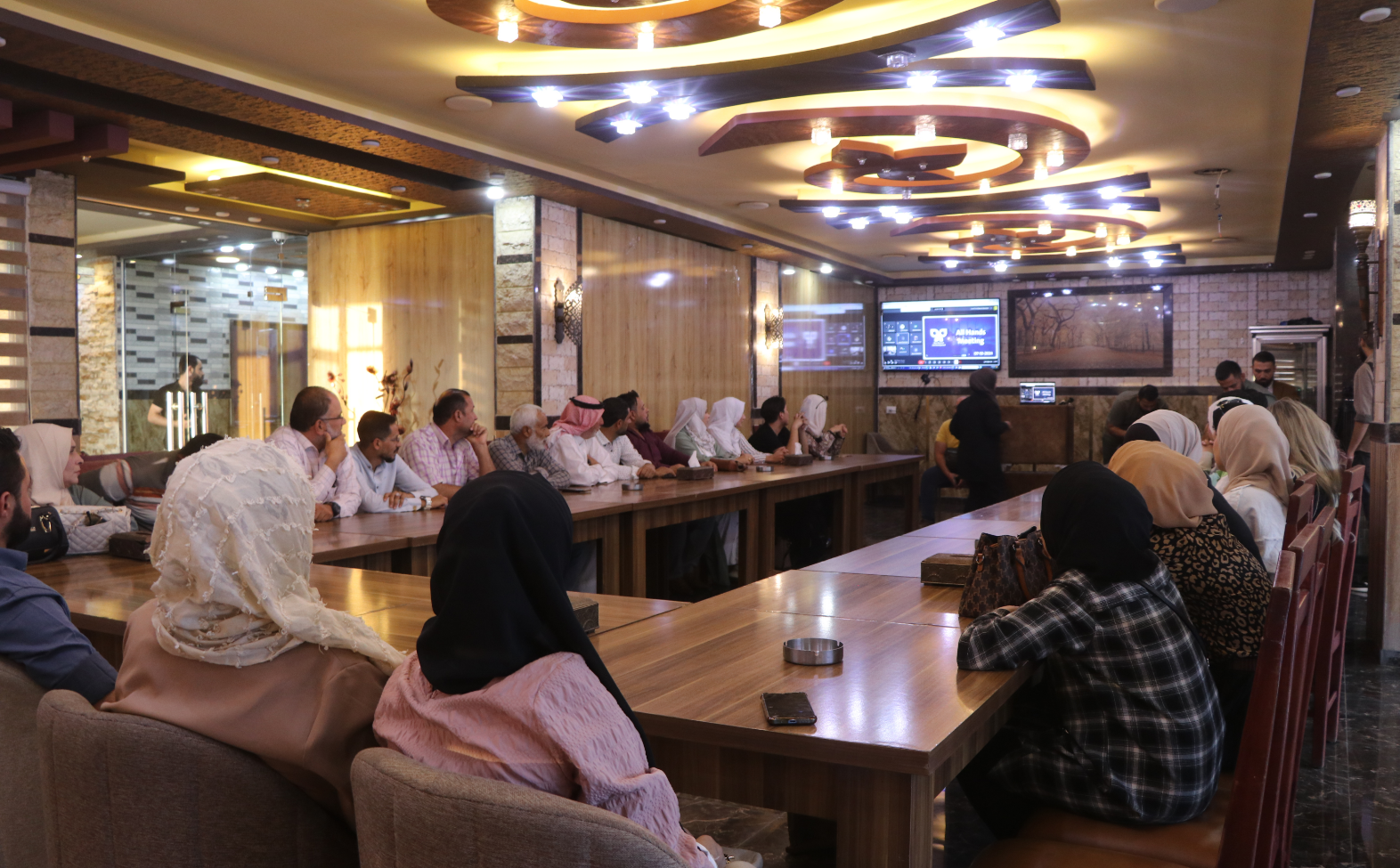
Mari Research and Development (MRD is a “knowledge-sharing and civic empowerment” NGO registered in Canada that has implemented programmes in northeast Syria since 2019. In its new Damascus office, it is rapidly making up for lost time in former regime areas that were considered, until December last year, out of bounds. At an introductory politics session, a roomful of women listened intently to explanations of how good governance works. Amidst definitions of constitutions and committees, a spirited debate erupted over whether Syria should hold immediate elections, a conversation that would have been unthinkable a year ago.
© syriaintransition.com
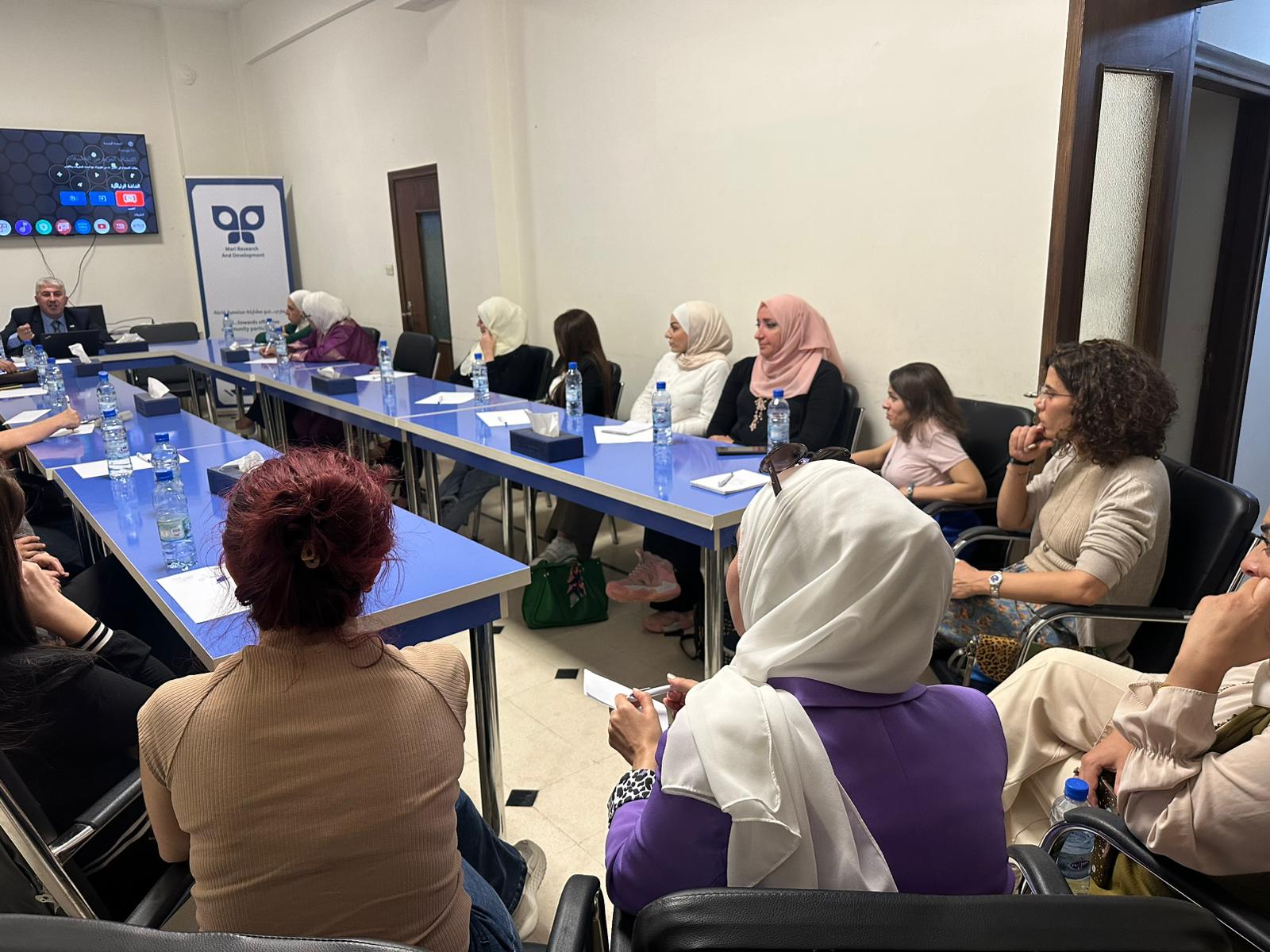
“We couldn’t even press the ‘like’ button before [on social media posts we liked], but this is real civil society,” says Rana Ismael, an IT teacher eager to have her name recorded in Syria’s new political chapter.
Mari’s executive director, Dr Eyad Amin, acknowledges a higher “fear factor” among Syrians in places like Damascus compared to those in the northwest or northeast; but insists it is a “golden opportunity” for CSOs to engage the government. “CSOs can be proud of what they created – they helped sustain Syria and the revolutionary spirit. They are an integral part of Syria’s liberation.”
Because of that, a number of former civil society leaders moved into politics, being appointed as ministers or MPs. While broadly welcomed, this has raised concerns of potential state co-option that turns CSOs into cheerleaders. Dr Amin argues for clear lines between those in power and those who hold them to account.
He also thinks Syrian NGOs should pivot away from foreign donors to more sustainable income streams from the private sector and charitable foundations. His organisation lost its US funding, but, thanks to donor diversification, was able to maintain operations, at least in-part. “There’s a lot you can do with just a room,” he explains.
The hope is that CSOs will seize the day to build the new civil society architecture based on integrity, realism, and a genuine and inclusive state-building ethos. It is also hoped that both the government and foreign donors support that process for its own sake.