What’s left of the SNA
Syrian National Army factions are dispersed but remain too useful to demobilise
The Syrian National Army has vanished on paper, but its factions – rebranded, relocated, or quietly absorbed – still shape the country’s security landscape. A sweeping “dissolution” folded rebel groups into new army divisions, yet many networks of profit, patronage and foreign influence have simply gone underground. From Afrin to Deir Ezzor, former SNA units now serve as useful auxiliaries: too large to ignore and too valuable to fully demobilise.
In the second half of the Syrian civil war the rise of the so-called Syrian National Army (SNA) exposed just how splintered the northern insurgency had become. What emerged were two distinct zones: Idlib and its hinterland under the dominance of Hay’at Tahrir al-Sham (HTS) and its junior partners in the National Liberation Front; and the northern border strip across Aleppo, Raqqa and Hasakah, controlled by the Syrian National Army (SNA) and effectively under Turkish oversight.
The SNA’s name evokes the idea of a coherent, professional force organised into corps, divisions and brigades. In reality, much of this architecture existed only on paper. Creating divisions within the envisioned framework would have required an agreed command hierarchy, which in practice was never established.
Freedom fighters to proxies
The SNA was a loose federation of factions draped in the language of professional armies. At one point within the Second Corps, for instance, entire “divisions” were placeholders for single factions: Sultan Murad controlled the 21st and 24th Divisions, the Hamza Division controlled the 22nd Division, and Jaysh al-Islam and Faylaq al-Rahman – evacuated from East Ghouta – took the 25th and 26th Divisions, respectively. On the ground, the labels changed and some groups shifted to different corps; but the factions and factional essence of the SNA persisted. A useful analogy for grasping the SNA’s structure is Iraq’s Popular Mobilisation Forces (PMF), which to this day generally preserves the distinct factional identities of its constituent brigades.
For critics, the SNA came to symbolise gang rule and the mutation of the once-celebrated “good FSA” into a network of Turkish-backed proxies.
The Liberation and Construction Movement (LCM), founded in February 2022 under Ahrar al-Sharqiya leader Abu Hatem Shaqra, is a case in point. The LCM operated as a regional bloc, composed almost entirely of fighters from Raqqa, Deir Ezzor, and the Badia desert. Today it has been re-organised into the Syrian Army’s 86th Division, which controls frontlines with the SDF in Deir Ezzor. Abu Hatem, now a Brigadier-General, confidently told Reuters in September that he did not fear losing his military rank over Western criticism of his human rights record because, as he put it, “How can Sharaa take it away from me? We gave him his power by agreeing on him as president.” All of this underscores that the SNA project of building a unified “national army” never moved beyond the drawing board.
For critics, the SNA came to symbolise gang rule and the mutation of the once-celebrated “good FSA” into a network of Turkish-backed proxies. The accusations were rooted in real events: the widespread seizure of Kurdish property after the 2018 Afrin offensive; the SNA’s role in operations against the SDF in Raqqa and Hasakah; and its fighters’ deployment to Libya and Nagorno-Karabakh in support of Ankara’s allies. In northern Syria, infighting over territory, checkpoints and smuggling rights was more the rule than the exception. At times HTS intervened directly on behalf of favoured partners, most notably the worst of the “rotten apples” in the SNA: the Sultan Sulayman Shah faction headed by the sanctioned Mohammad al-Jasim, aka Abu Amsha, who is now also a Brigadier-General. These HTS interventions escalated in 2022 into limited incursions into SNA-held areas, prompting resistance from local factions and Turkey. The impression that remained, however, was of an insurgent landscape drifting steadily away from anything that resembled a coherent national army.
Relocation
Today, what remains of the SNA? On paper, nothing. All insurgent factions – including those under the SNA umbrella – were formally dissolved at the “Victory Conference” in January, where Ahmad al-Sharaa gathered dozens of rebel commanders to swear allegiance to him as the capo di capi. The transitional government’s Ministry of Defence then began folding the SNA factions into newly minted army divisions, an effort that has produced an uneven and often contradictory organisational structure.
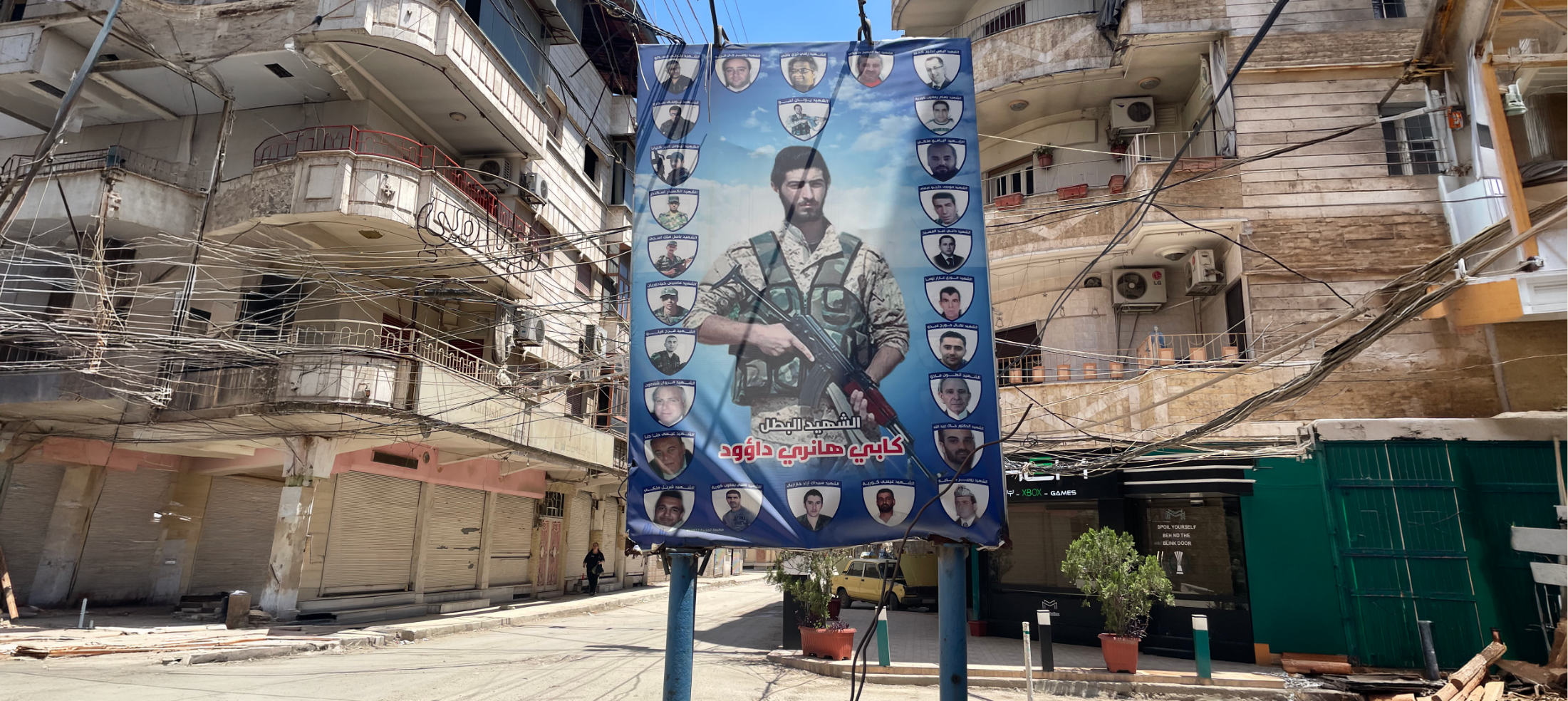
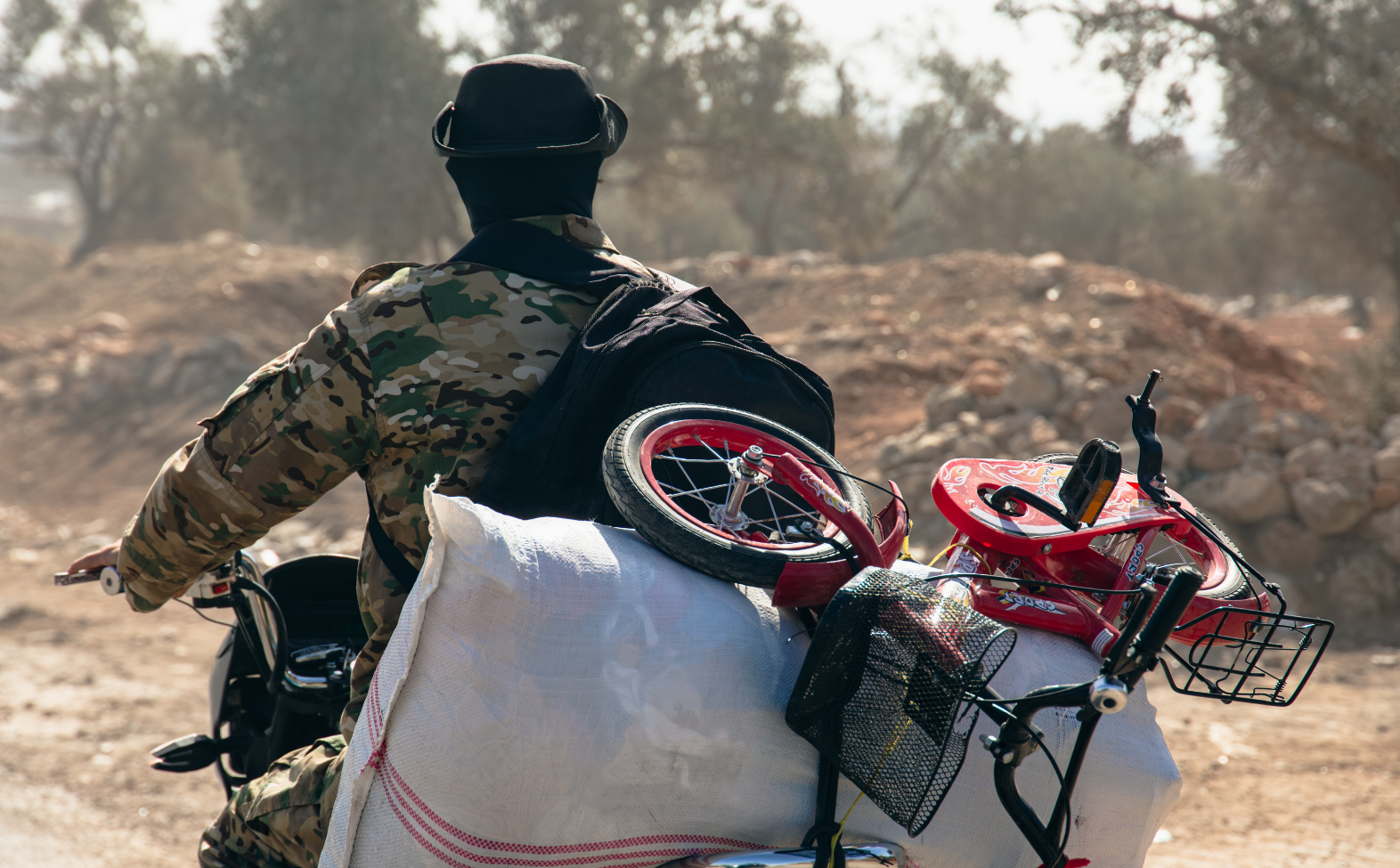
Outwardly, the new divisions appear to move beyond the factional identities of the SNA. Old faction insignia have largely disappeared from uniforms and signposts. In northern Aleppo most checkpoints that once belonged to SNA factions have disappeared, posters commemorating 'martyrs' of SNA factions have largely been removed, and many former training camps and HQs sit empty. Maintaining order is Internal Security Forces, a new force run by the Interior Ministry that merges policing and gendarmerie roles, and that relies on a core of HTS personnel augmented by ex-SNA personnel and fresh recruits.
The “Damascus takeover” of security has largely been welcomed by locals, but it has not necessarily erased the SNA’s networks of power and profit. These still exist, albeit clandestinely. In Afrin, for instance, the government has introduced formal mechanisms for displaced Kurds to reclaim property confiscated under SNA rule. Yet multiple reports suggest that many of the same SNA-era networks – now wearing the uniforms of the new army and security bodies – are reluctant to surrender homes, farms and shops that provide accommodation and generate steady income for them and their associates. In some cases, the personnel of the supposed new army simply refuse to hand them back.
Some of the SNA factions that were known for prior tensions with HTS have been co-opted by the HTS network.
The reduced visibility of SNA factionalism in the areas it once controlled is the result of two overlapping dynamics. Firstly, some of these factions - especially the smaller ones - have been genuinely absorbed into the new military and security structures. The 80th Division in Afrin is commanded by the former leader of the reconstituted Nour al-Din al-Zinki faction, and brings together fighters from several now defunct SNA groups, including parts of a small Third Corps SNA coalition known as the Renaissance and Liberation Movement (RLM). Other RLM fighters, however, have been reassigned elsewhere. Some have been folded into the 72nd Division, also based in Aleppo province, Thair Maarouf, former head of the Samarkand Brigade (an RLM constituent), told Syria in Transition.
Secondly, some larger and better known SNA factions that entered the new army with their smuggling networks and rackets largely intact have been redeployed to home turfs where predatory habits are more difficult to sustain on one's "own people." The 62nd Division – what used to be called the Sultan Sulayman Shah division – now serves in Hama where most of its fighters hail, rather than in Afrin. Similarly, the 86th Division, drawn largely from Ahrar al-Sharqiya and the other LCM groups that were based in northern Aleppo and Tal Abyad, has relocated to Deir Ezzor, where its commander is from. The Jaysh al-Islam faction has been folded into the 70th Division and largely returned to its native East Ghouta.
Some of the SNA factions that were known for prior tensions with HTS have been co-opted by the HTS network that leads the government and its military apparatus. In Azaz, the Northern Storm Brigade – once part of the Levant Front (Jabha Shamiya) and long known for resisting HTS encroachment – has been folded into the army’s 60th Division, which is led by a former HTS commander. The appointment of Mudar Najjar, a prominent Levant Front figure, as deputy commander (also with the rank of Brigadier-General) suggests a negotiated accommodation between the new masters and old foes. It doesn’t involve full integration so much as a carefully managed co-option that preserves key networks under the oversight of an HTS veteran.
Still useful
Taken together, these shifts give some substance to the government’s claim that the SNA factions have been “dissolved,” and certainly the SNA no longer exists as a coherent bloc with its own distinct administrative realm. It remains an open question, however, whether the HTS-led government can genuinely integrate these groups, whose rank-and-file outnumber its own forces. The answer is certainly not technical talk of security sector reform (SSR.)
Foreign sponsorship of armed groups is a further key hindrance to the creation of truly national defence structures. External powers will not easily relinquish their assets, and this applies equally to the SDF, Suwayda’s National Guard, and to what remains of the old Syrian army and the SNA.
The ambiguity at the heart of Syria’s architecture of violence serves too many interests to be easily dismantled.
When HTS-led forces marched on Damascus, it was SNA formations that pushed the SDF back from Manbij. This suited everyone: Sharaa avoided being directly implicated in fighting a US-aligned force; and Turkey retained assets on the ground that allowed it to keep the decisive say on the Kurdish question. A year on, these former SNA groups - now operating as army divisions - still man the frontlines and engage in regular skirmishes with the SDF. For Ankara, they constitute leverage, not only against the SDF but against Sharaa also, should he stop listening to its “advice.” For Sharaa, they are a force that can be unleashed while maintaining a degree of plausible deniability – while preserving his own HTS core for the battles that really matter.
The ambiguity at the heart of Syria’s architecture of violence serves too many interests to be easily dismantled.